Is that Solar Panel Pointing in the Right Direction?
A new technique uses a single image to forecast — and maximize — the energy a solar panel will produce over a year.
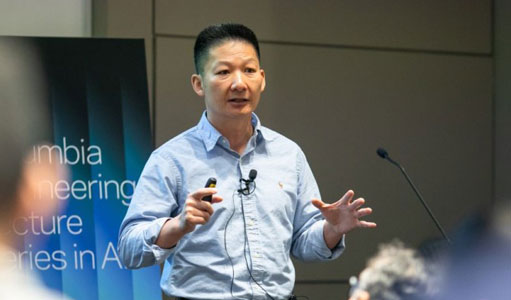
Bjarne Stroustrup discusses how C++ was meant to bridge high-level abstractions with low-level system control, the criticisms some have of memory safety and null pointers (and how to address these problems in your code), and … Continue reading He Designed C++ to Solve Your Code Problems
Co-led by Henry Yuen, a new multi-university grant from the Air Force Office of Scientific Research will examine whether larger quantum operations could reduce errors and make future quantum computers more practical.
As video games continue to evolve, so does the push to make them more inclusive. But accessibility still often means … Continue reading Making Games More Playable, Not Just Accessible
Large language models can process vast amounts of text—but their ability to interpret nuance, hidden meaning, and nonlinear storytelling remains an open question.
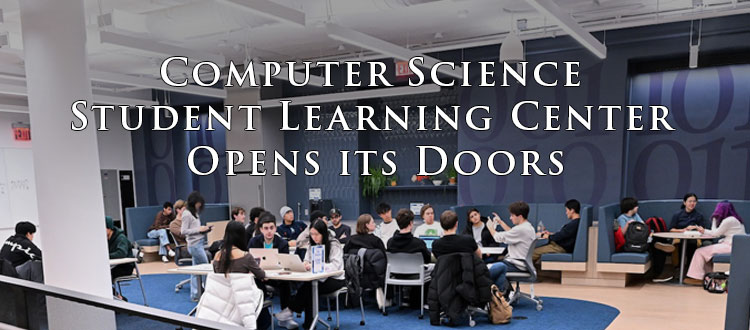
The new space in Schermerhorn Hall will support collaborative learning and community connection among students and faculty.
Recent work from the Data, Agents, and Processes Lab (DAPLab) explores a core challenge in AI agents: how to move … Continue reading Rethinking How AI Agents Work in Practice
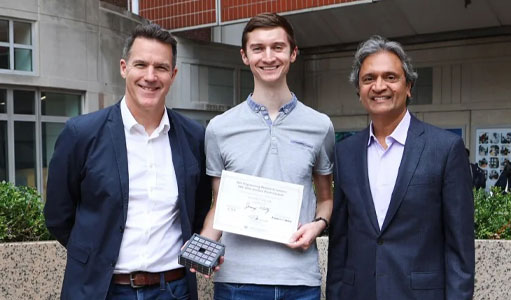
From advancing AI and quantum computing to improving systems and security, PhD students are shaping the future of technology through cutting-edge … Continue reading PhD Students Recognized with Top Fellowships
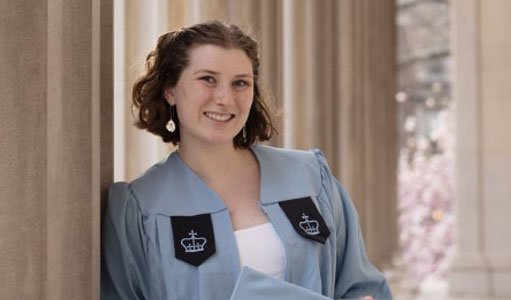
Janie Zhang is studying computer science and psychology, exploring the overlap between human behavior and artificial intelligence.
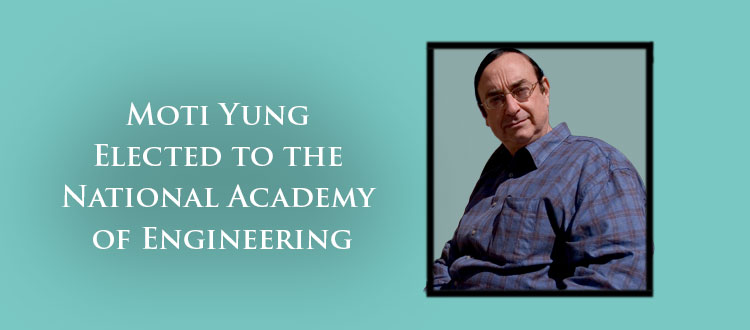
Moti Yung (PhD’88) is recognized for contributions to cryptography and its applications in information technology systems.
Find open faculty positions here.
President Bollinger announced that Columbia University along with many other academic institutions (sixteen, including all Ivy League universities) filed an amicus brief in the U.S. District Court for the Eastern District of New York challenging the Executive Order regarding immigrants from seven designated countries and refugees. Among other things, the brief asserts that “safety and security concerns can be addressed in a manner that is consistent with the values America has always stood for, including the free flow of ideas and people across borders and the welcoming of immigrants to our universities.”
This recent action provides a moment for us to collectively reflect on our community within Columbia Engineering and the importance of our commitment to maintaining an open and welcoming community for all students, faculty, researchers and administrative staff. As a School of Engineering and Applied Science, we are fortunate to attract students and faculty from diverse backgrounds, from across the country, and from around the world. It is a great benefit to be able to gather engineers and scientists of so many different perspectives and talents – all with a commitment to learning, a focus on pushing the frontiers of knowledge and discovery, and with a passion for translating our work to impact humanity.
I am proud of our community, and wish to take this opportunity to reinforce our collective commitment to maintaining an open and collegial environment. We are fortunate to have the privilege to learn from one another, and to study, work, and live together in such a dynamic and vibrant place as Columbia.
Sincerely,
Mary C. Boyce
Dean of Engineering
Morris A. and Alma Schapiro Professor