

Columbia Experts Urge Calm Amid AI Panic
More transparency is needed, experts say.
More transparency is needed, experts say.
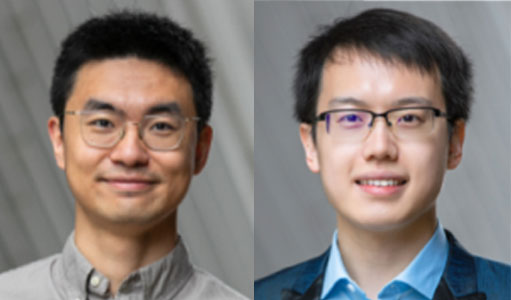
Zhuo Zhang and Zishen Wan are among the researchers and innovators who have recently joined Columbia Engineering.

Professor Itsik Pe’er and Associate Professor Eugene Wu have been selected to help lead the National Synthesis Center for Organismal Resilience (NSCORE), a multidisciplinary research center that will bring together biologists and computer scientists to … Continue reading Columbia to Lead $20 Million National Research Center on Organismal Resilience

Computing systems now have to keep pace with increasingly capable artificial intelligence (AI). Robots, agentic AI, autonomous systems, and other … Continue reading Zishen Wan Brings AI-Native Computing Research to Columbia
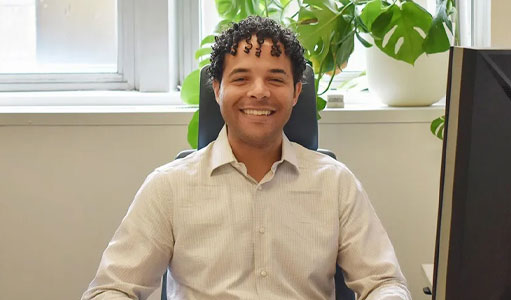
Associate Professor Brian A. Smith has four Columbia degrees. How did he find his path, and what advice does he have for the rest of us, who are looking for one as well?

Gretta VanZatten, a computer science major from Columbia College, is among the four Columbians chosen for the New York City … Continue reading Greta VanZetten (CC’26) Named 2026 NYC Urban Fellow
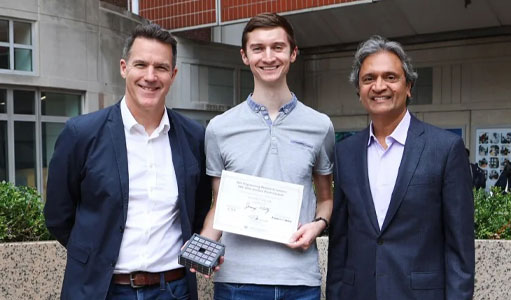
PhD student Jeremy Klotz won second place nationally in the NSF Engineering Research Center (ERC) Perfect Pitch competition, competing against student representatives from all 16 of the country’s Engineering Research Centers. Using a single slide, … Continue reading Jeremy Klotz Takes Second Place at NSF’s ERC Perfect Pitch Competition
For Jun Rao (PhD ’00), data streaming is helping make information more accessible when it matters.
From developing new approaches to artificial intelligence and computer systems to tackling challenges in security, theory, and beyond, PhD students … Continue reading Fellowships Recognize Outstanding PhD Researchers

What makes a quantum proof more powerful than a classical one? A paper by John Bostanci (PhD ‘26) and his … Continue reading Understanding Why Quantum Proofs Can Be More Powerful Than Classical Ones
 Add to GMail