

Columbia Experts Urge Calm Amid AI Panic
More transparency is needed, experts say.
More transparency is needed, experts say.

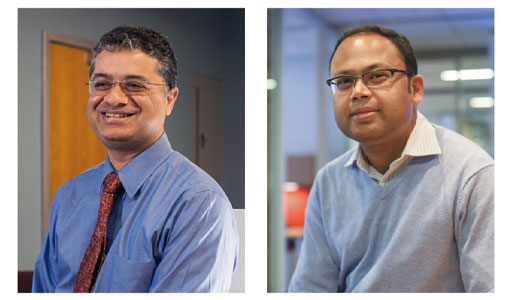
Zhuo Zhang and Zishen Wan are among the researchers and innovators who have recently joined Columbia Engineering.

Professor Itsik Pe’er and Associate Professor Eugene Wu have been selected to help lead the National Synthesis Center for Organismal Resilience (NSCORE), a multidisciplinary research center that will bring together biologists and computer scientists to … Continue reading Columbia to Lead $20 Million National Research Center on Organismal Resilience

Computing systems now have to keep pace with increasingly capable artificial intelligence (AI). Robots, agentic AI, autonomous systems, and other … Continue reading Zishen Wan Brings AI-Native Computing Research to Columbia

Associate Professor Brian A. Smith has four Columbia degrees. How did he find his path, and what advice does he have for the rest of us, who are looking for one as well?

What makes a quantum proof more powerful than a classical one? A paper by John Bostanci (PhD ‘26) and his … Continue reading Understanding Why Quantum Proofs Can Be More Powerful Than Classical Ones

Artificial intelligence (AI) agents are rapidly reshaping how people interact with data, software, and digital systems. As these technologies become … Continue reading Inside the Research Shaping Agentic Data Environments
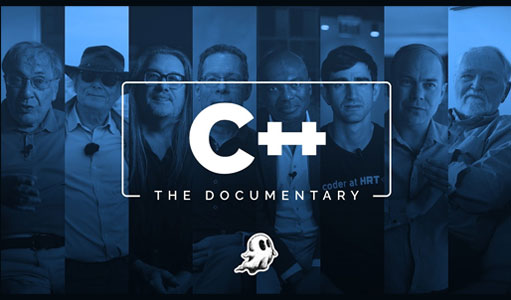
Some technologies fade into history. Others evolve, adapt, and endure. C++ belongs firmly in the latter category. More than four … Continue reading C++ The Documentary

Schulzrinne is honored for advancing the protocols and technologies behind modern internet communication.

Papers from CS researchers have been accepted to the 47th IEEE Symposium on Security and Privacy (IEEE S&P 2026), a … Continue reading Security Research Recognized at IEEE S&P 2026

Hollis Lehv BS’20, MS’21, is on a mission to make gaming more accessible.
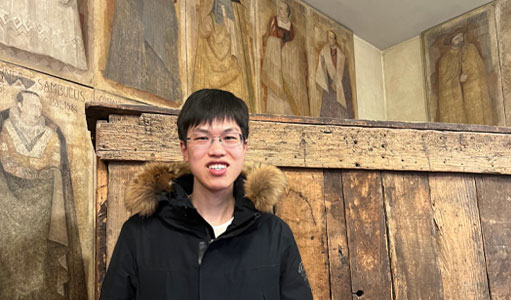
Machine learning systems often assume that the data they learn from is mostly trustworthy. But what happens when that data … Continue reading Voices of CS: Yizhi Huang on Nasty Noise versus Malicious Noise

A new technique uses a single image to forecast — and maximize — the energy a solar panel will produce over a year.
Recent work from the Data, Agents, and Processes Lab (DAPLab) explores a core challenge in AI agents: how to move … Continue reading Rethinking How AI Agents Work in Practice

Bjarne Stroustrup discusses how C++ was meant to bridge high-level abstractions with low-level system control, the criticisms some have of memory safety and null pointers (and how to address these problems in your code), and … Continue reading He Designed C++ to Solve Your Code Problems
 Add to GMail