

Fellowships Recognize Outstanding PhD Researchers
From developing new approaches to artificial intelligence and computer systems to tackling challenges in security, theory, and beyond, PhD students are pursuing research across the field. Several students have recently been selected for prestigious fellowships that recognize their accomplishments and support the next stage of their work.
2026 Apple Scholars in AIML
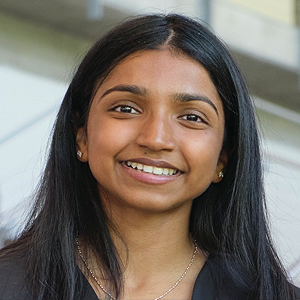
Sruthi Sudhakar is a first-year PhD student working with Carl Vondrick and Richard Zemel. She is interested in building generalizable machine learning models and agents that learn strong representations of the world, enabling interaction. She is particularly interested in generalization, compositionality, efficient learning, and downstream healthcare applications.
Sudhakar graduated from the Georgia Institute of Technology with a BS in Computer Science and received Georgia Tech’s 2021 Outstanding Undergraduate Research Award.
NSF Graduate Research Fellowships Program
 Marten Garicano is a first-year PhD student working with Daniel Hsu and Adam Block. His research focuses on the theory of machine learning, particularly learning theory and optimization, with an interest in how structure in data, problem instances, and interactive environments can lead to stronger learning guarantees.
Garicano earned dual BAs in Mathematics with Honors and Classical Studies from the University of Chicago in 2026, graduating magna cum laude and Phi Beta Kappa. Outside of research, he enjoys cooking Mediterranean food, learning languages, reading classics, and playing football.
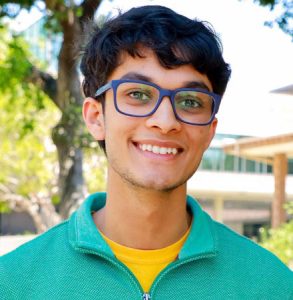 Mithra Karamchedu is a first-year PhD student in computer science and a member of the Theory Group, advised by Josh Alman, Xi Chen, Toniann Pitassi, and Rocco Servedio. His research interests include combinatorial algorithms and complexity theory.
He earned a Bachelor of Science in Computer Science and Mathematics from Harvey Mudd College. In addition to receiving the NSF Graduate Research Fellowship, he was a Goldwater Scholar and received Harvey Mudd’s Don Chamberlin Computer Science Research Award, the Wing and Ellen Tam Award, the Robert James Prize, and an Honorable Mention for the Giovanni Borrelli Mathematics Fellowship. Outside of research, he enjoys photography, reading, watching movies, and playing video games.
 Edward Guo is a second-year PhD student in computer science working with Kostis Kaffes and Asaf Cidon. His research focuses on computer systems, particularly making virtual machines and sandboxes faster and more efficient. He is broadly interested in improving the utilization and efficiency of large-scale computing through resource sharing, as well as exploring systems applications for and by artificial intelligence agents.
He earned a Bachelor of Science in Computer Science from Hofstra University in 2025. Outside of research, he enjoys reading fiction, cooking, and taking long walks.
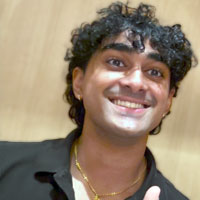 Sid Srikanth is a first-year Ph.D. student at the RoboPIL Lab advised by Yunzhu Li. His research focuses on developing and improving generalist robot foundation models. He is particularly interested in how such robots can be deployed in human environments to learn to work with and support people.
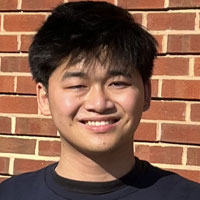 Terry Tong is a first-year PhD student in the CausalAI Lab advised by Elias Bareinboim. He is interested in the intersection of computation, statistics, and causality. His research explores the theoretical underpinnings of modern AI and deep learning, with the goal of transforming these statistical machines into causal ones.
Prior to Columbia, Tong spent time in industry working on RL and multi-agent systems at Cohere Labs as a Research Scholar, and AI Safety at Constellation as an Astra Fellow. He has conducted research at the University of Pennsylvania as a Research Intern with Dan Roth and Surbhi Goel, and as an undergraduate researcher at UC Davis with Muhao Chen. He graduated from UC Davis in 2025 with a BS in Computer Science and received an honorable mention from the CRA Outstanding Undergrad Researchers 2025.
In his free time, he enjoys collecting (and attempting to read) books, fishing, and dancing to Michael Jackson.
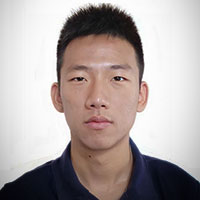 Jun Ren is a first-year PhD student advised by Zhuo Zhang. His research focuses on AI agents, particularly agent security, trustworthy agentic systems, and software engineering automation.
Before joining Columbia, Jun earned his BS in Computer Science from The University of Texas at Dallas in 2024, where he worked with Wei Yang on mobile UI testing and foundation-model evaluation. He has also gained research and industry experience at Ant Group, Fudan University, and Oak Ridge National Laboratory. Jun was a member of a team that placed in the global top ten in the Amazon Trusted AI Challenge. Outside of research, he enjoys playing soccer and video games.
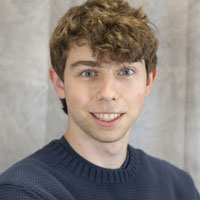 Jacob Tjaden is a first-year PhD student in the DAPLab advised by Baishakhi Ray. His research interests lie at the intersection of software engineering and artificial intelligence.
He received his B.A. Computer Science from Colby College in 2026. In his spare time, he plays ultimate frisbee all around the city and casually tinkers with digital design via Photoshop and video editing.
National Institutes of Health Research Training in Biomedical Informatics (T15)
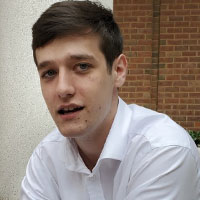 Ryan Shea is a second-year PhD student in computer science working with Zhou Yu. His research focuses on developing more biologically plausible AI systems, including biologically inspired methods for training neural networks and more realistic neural network architectures. He is particularly interested in applying principles from biology and neuroscience to build more efficient and scalable AI models.
He earned a BA in Economics from Virginia Tech in 2019 and an MS in Computer Science from Columbia University in 2023. He has received a GRA scholarship from Columbia University and an Honorable Mention from the NSF Graduate Research Fellowship Program. Outside of research, he enjoys playing tennis, watching movies, and playing video games.
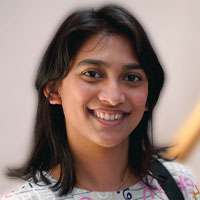 Argha Talukder works on machine learning for computational biology, with a focus on learning identifiable, disentangled representations from multi source biological signal. She is a fourth-year PhD student advised by Itsik Pe’er and David A. Knowles. In her spare time, she learns new languages by watching foreign films.
SEAS Fellowships
SEAS Doctoral
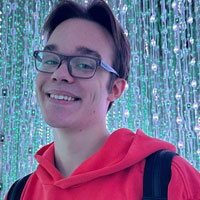 Egor Petrov is a first-year PhD student working with Eugene Wu and Kostis Kaffes. His research focuses on post-training efficiency and optimization, with broader interests in large-scale LLM training, pretraining, post-training, scaling, and optimization.
He earned a BS in Applied Mathematics and Physics from the Moscow Institute of Physics and Technology. His research on optimization and asynchronous pipeline parallelism has appeared in the main tracks of ICLR 2026 and ICML 2026. Outside of research, he enjoys watching movies, playing board games, and hiking.
Presidential Fellowship
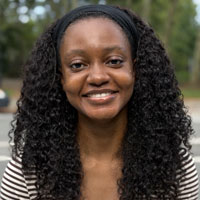 Leanne M. Annor-Adjaye is a first-year PhD student working with Julia Hirschberg. Her research interests lie at the intersection of natural language processing and speech technology, with a particular focus on developing speech and language technologies for low-resource African languages. Her previous work includes building unsupervised automatic speech recognition systems for Twi.
Before joining Columbia, Leanne earned a BSc in Computer Science from Ashesi University in Ghana in 2024, where she graduated summa cum laude and was the university valedictorian. She previously worked as a teaching and research assistant at Ashesi, where she was involved in teaching computer science and conducting research in speech and language technology.
She is a recipient of the Columbia SEAS Presidential Fellowship. Outside of research, she enjoys solving puzzles, swimming, traveling, crocheting, and exploring new places and activities.
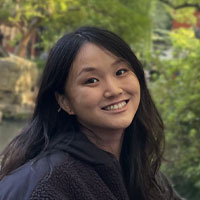 Sophie Wu is a first-year PhD student advised by Kathleen McKeown. Her research explores the intersection of digital humanities and natural language processing. Specifically, she is interested in how language models can advance our understanding of human culture, as well as how theory from the humanities can inform more culturally aligned and socially beneficial AI systems.
Wu received a BA in Mathematics from the School for Advanced Studies in the Arts and Humanities at Western University and an MA in Digital Humanities from McGill University, advised by Andrew Piper. During her masters, she worked on evaluating language models on multilingual story moral generation, and was supported by the SSHRC Canada Graduate Scholarship as well as the Fonds de recherche du Québec (Société et culture) Masters scholarship. She has also completed an internship with the National Research Council of Canada, supervised by Saif Mohammad, where she researched the significance of embodied word use in everyday language. In her free time, she likes to read, cook with friends, play music, and dance.
Greenwoods Fellowship
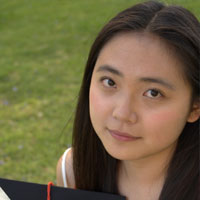 Erica Wang is a first-year PhD student working with Elias Bareinboim. Her research interests lie at the intersection of machine learning and causal inference.
She earned a BS in Computer Science from Caltech in 2026, where she was a Mellon Mays Fellow. She has also been a Summer Undergraduate Research Fellow at NASA’s Jet Propulsion Laboratory and Tsinghua University. Outside of research, she enjoys running, reading, trying new foods, and learning how to swim.
Mudd Fellowship
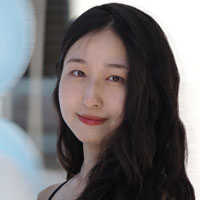 Anjing Liu is a first-year Ph.D. student, advised by David Knowles and Gao Wang. Her research is broadly focused on developing statistical methods for computational biology and statistical genetics. Her interests include machine learning, Bayesian methods for genetic fine-mapping, and modeling complex genetic effects across molecular and cellular contexts.
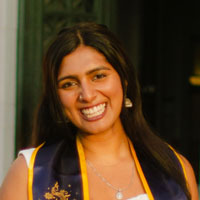 Sarika Pasumarthy is a first-year PhD student advised by Julia Hirschberg. Her research interests involve clinical applications of natural and spoken language processing. She is also interested in the intersection between public health, social good, and computing.
She is from San Diego, California, and graduated from the University of California, Berkeley in May 2026 with a BA in Computer Science and a BS in Business Administration with honors. While at UC Berkeley, she was involved in the Berkeley Speech Group and the Computational Healthcare for Equity and iNclusion Lab, and she is also a Cal Alumni Scholar, Beta Gamma Sigma member, Leadership Award Recipient, and Accel Scholar. She has previously interned as a software engineer on infrastructure and cloud platform teams at Pinterest and Amazon, and most recently spent her summer teaching high schoolers in Jamaica computer science fundamentals. In her free time, she likes to read, try new matcha shops, and work out.
Tang Family Fellowship
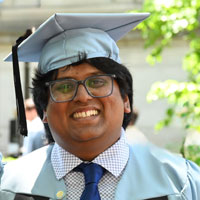 Pranav Mantri is a first-year PhD student advised by Jason Nieh and Gail Kaiser. His research interests include scalable computer systems and autonomous software development. In particular, he studies how AI agents build and reason about complex, interdependent systems and how development frameworks can improve the reliability of the software they produce.
Pranav graduated in 2026 with a BA in Computer Science from Columbia University. He likes spending his free time playing badminton and the piano, reading (and debating) philosophy, as well as cooking.
Grossman Fellowship
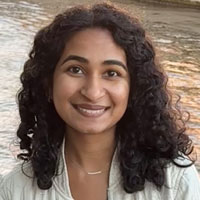 Neha Pant is a first-year PhD student in the Theory Group and is advised by Josh Alman. Her research interests are in algorithms and complexity theory, and she especially enjoys problems on graphs.
 Srivani Family PhD Fellowship
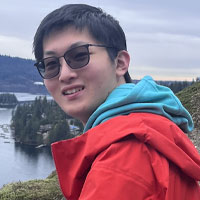 Rain Zimin Yang is a first-year PhD student in the theory group advised by Rocco Servedio, Toniann Pitassi, Xi Chen, and Josh Alman. His main research interests include computational complexity, analysis of Boolean functions, and query complexity. He is also broadly interested in quantum computing and automata theory.
Artificial Intelligence & Autonomous Systems Fellowship
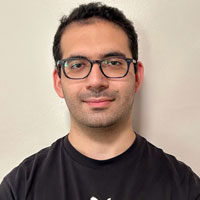 Huseyn Gambarov is a first-year PhD student working with Henning Schulzrinne. His research focuses on computer networks, particularly the Internet of Things and networking for autonomous vehicles. He has also worked on IP geolocation research, including developing a measurement meta-platform that brings multiple active internet measurement platforms together through a single interface.
He earned an MS in Computer Science from Case Western Reserve University in 2026 and a BS in Information Security from Baku Higher Oil School in Azerbaijan in 2023. He presented his IP geolocation research at the GMI-AIMS-5 workshop at UC San Diego in 2025. Outside of research, he enjoys exploring new cuisines, baking bread, and trying new recipes.
Schrage Engineering Fellowship
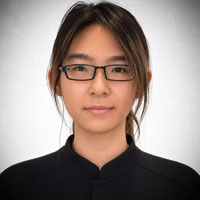 Ut (Jo Jo) Gong is a first-year PhD student advised by Brian A. Smith in the Computer-Enabled Abilities Laboratory (CEAL). Their research focuses on human-computer interaction, accessibility, visualization, and extended reality, with a particular interest in designing interactive systems that improve access to visual and spatial information for people who are blind or have low vision.
Before joining Columbia, Gong received a BS in Informatics from the University of Washington in 2023 and conducted research at Harvard University and Zhejiang University. During their undergraduate studies, they received the Macau Government Elite Institutions Program Fellowship, which covered their undergraduate tuition. Outside of research, they enjoy sports, traveling, and exploring new technologies.
 Add to GMail