

Recognizing Undergraduate Leaders in Computer Science Research
Research isn’t just for graduate students. This year, three SEAS students have been honored with the 2026 CRA Outstanding Undergraduate Researcher Award, recognizing their dedication, originality, and influence in their fields. Nominated by faculty, their work demonstrates how undergraduate research can drive real innovation and discovery.
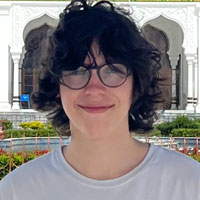 Szymon Snoeck – Finalist
Szymon Snoeck is a fourth-year applied mathematics major in SEAS with a minor in computer science. He has spent the past two years working as a teaching assistant and conducting research with Senior Lecturer Nakul Verma and PhD student Noah Bergam. Their work has led to two research papers accepted at conferences: one showing that practitioners cannot reliably infer the existence of clusters from t-SNE visualizations alone (under review at ICLR 2026), and another demonstrating that preserving local neighborhood structure in low-dimensional embeddings is broadly impossible (ALT 2026). Together, these papers are among the first to provide a theoretical foundation for how data visualization can produce misleading interpretations.
Szymon is currently investigating the broader problem of faithful low-dimensional representations of high-dimensional data, with a focus on providing rigorous theoretical guarantees which are largely missing from existing literature.
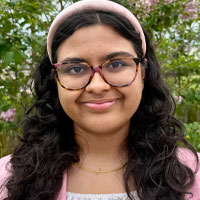 Sharanya Chatterjee – Honorable Mention
Sharanya Chatterjee is a sophomore in SEAS studying computer science and applied mathematics. She does computational cancer biology research in the Azizi Lab under the mentorship of Associate Professor Elham Azizi. Sharanya worked on Echidna, a new statistical model (with a manuscript currently under revision at Nature Methods) that helps researchers understand how genetic changes influence the way cells adapt and change their behavior. She has also studied pancreatic cancer, using data science and machine learning to track how cancer cells evolve over time and become more flexible or treatment-resistant.
Currently, Sharanya is investigating the rare phenomenon of spontaneous cancer regression in chronic lymphocytic leukemia by combining multiple types of genetic and cellular data. Before joining the Azizi Lab, she did research at the University of Florida, where she helped build a “digital twin” model to study how low-oxygen conditions affect lung blood vessel cells.
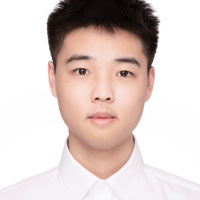 Tianle Zhou – Honorable Mention
Tianle Zhou is a senior in SEAS studying computer science and an undergraduate researcher in the DAPLab, working under the guidance of Associate Professor Eugene Wu and Assistant Professor Kostis Kaffes. He began working in the lab in Spring 2025, where he contributed to a dataset search system project and, by the summer, was leading his own research effort. This work resulted in a prototype system for efficiently checkpointing agent-driven exploration and served as the basis for a paper presented at the Systems for Agentic AI workshop at the Symposium on Operating Systems Principles (SOSP 25) in October 2025.
He continues to investigate how autonomous agents can be effectively supported in real-world, stateful system environments, with a particular focus on the challenges that emerge when agents are deployed for complex, multi-step tasks. His ongoing work has led to multiple research papers currently under submission to leading conferences.
The recognition showcases a dynamic research community where undergraduates are supported in exploring new ideas and achieving academic excellence. Faculty frequently welcome undergraduate researchers, and interested students are encouraged to connect with professors to learn more.
Nakul Verma works closely with multiple undergraduate students on various theoretical and practical machine learning projects. Students should be highly motivated and must demonstrate a strong understanding of machine learning models. Interested students can email Prof. Verma directly with their CV and other relevant materials.
Elham Azizi welcomes motivated Columbia undergraduate students who are passionate about bridging computational sciences and cancer biology to apply to the Azizi Lab. Students should commit to research spanning at least two semesters. Email Elham (elham AT azizilab DOT com) with your CV, major, and research interests.
Eugene Wu is co-director of the Data, Agents, and Processes Lab (DAPLab), which brings together 14 faculty and ~25 PhDs on the topics of AI agents and automation. The lab maintains a list of active projects, and students with the appropriate background and interest can apply via the lab website: dap.cs.columbia.edu.
 Add to GMail