

PhD Students Recognized with Top Fellowships
From advancing AI and quantum computing to improving systems and security, PhD students are shaping the future of technology through cutting-edge research. Their work has earned national recognition, including prestigious fellowships that support their innovation and academic excellence. Meet the scholars whose research and achievements are making an impact across computer science and beyond.
Google PhD Fellowship
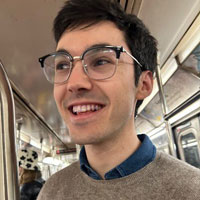 Zachary Horvitz is a fourth-year Ph.D. student advised by Kathleen McKeown and Zhou Yu. His research focuses on generative language models, including diffusion and alternative pre-training objectives, as well as inference-time scaling and control. He is particularly interested in reasoning and controllability in language models, evaluation of rare and harmful behaviors in generative AI, and AI for healthcare.
Horvitz received an A.B. in Computer Science and Anthropology (2019) and an Sc.M. in Computer Science (2020) from Brown University. His work has been recognized with the CAIT Fellowship (2024) and an Outstanding Paper Award from the Association for Computational Linguistics (ACL) in 2024. Outside of research, he enjoys playing frisbee, reading science fiction, and practicing calisthenics.
Capital One Fellows for AI
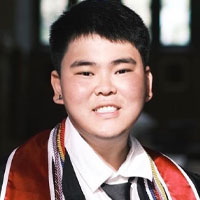 Tao Long is a fourth-year PhD student, advised by Lydia Chilton. Working on human–AI interaction, Tao’s research explores how humans collaborate with generative AI systems and AI agents over time, focusing on making AI tools more usable, useful, trustworthy, reliable and seamlessly integrated into everyday productivity practices. Specifically, Tao builds human–AI and agentic systems that reduce cognitive and temporal effort for challenging or complex tasks, offload work to AI while maintaining human ownership and authenticity and fit naturally into users’ existing processes for writers, developers, designers, event organizers and many other communities.
Before starting his PhD, Long earned a BS Summa Cum Laude from Cornell University.
Amazon-CAIT PhD Fellowship
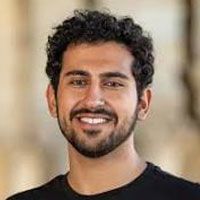 Rashid Al-Abri is a third-year PhD student advised by Gamze Gürsoy. His research centers on developing algorithms and machine learning methods to address challenges in genomics and multi-modal data integration. His recent work includes ScatTR, a method for estimating the length of long tandem repeats in the genome, which he presented at RECOMB 2025. As a Columbia Center for AI Technology PhD Fellow, he is also working on developing multi-modal large language models for functional genomics.
Before his PhD, Al-Abri received a Takatuf Oman International Scholarship and graduated from Stanford University with a BS in Computer Science, where he co-authored a 2023 Nature study on tandem repeat expansions in cancer. In his free time, he is passionate about cooking, biking, and bouldering.
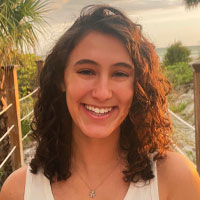 Hadleigh Schwartz is a fourth-year PhD student, advised by Xia Zhou, Dan Rubenstein, and Vishal Misra. Her research focuses on developing content authenticity and media provenance technologies for audio and video. Previously, she worked on the computer vision aspects of several laser-based sensing and communication platforms and spent a summer at NASA’s Jet Propulsion Laboratory developing simulation tools for validating vision-based spacecraft navigation and landing systems. She a recipient of a Columbia SEAS Presidential Distinguished Fellowship and an Amazon CAIT PhD Fellowship.
Schwartz graduated summa cum laude and Phi Beta Kappa from the University of Chicago in 2022, earning a BA and an MS in computer science. In her free time, she enjoys cooking, baking, playing guitar, and running.
Roblox Graduate Fellowship
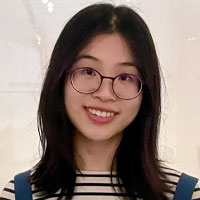 Honglin Chen is a fifth-year PhD student advised by Changxi Zheng. Her research interests lie at the intersection of physical simulation, optimization, and machine learning. In her research, she develops numerical and machine learning techniques to improve physical simulation or, conversely, use physical and geometric information to enhance real-world 3D tasks.
Before coming to Columbia, Chen received her MSc in Computer Science from the University of Toronto in 2021, advised by David I.W. Levin, and her B.Eng. in Computer Science from Zhejiang University in 2019. She interned at Adobe, Meta, Nvidia, and Microsoft Research Asia during her studies. Outside of research, Honglin enjoys running, photography, traveling, and visiting museums and art exhibitions in New York City.
Computer and Information Science and Engineering Graduate Fellowships (CSGrad4US)
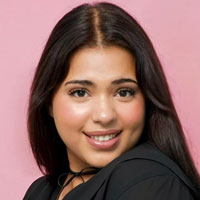 Lisa DiSalvo is a first-year PhD student currently interested in participatory design and digital civics, with a focus on informational democratization. Her research explores how communities can more equitably produce, interpret, and govern neighborhood information systems and public-facing urban technologies. She is also particularly interested in accessibility and literacy support using LLM-based tools to help residents better navigate and participate in public systems. She works with Brian A. Smith in the CEAL Lab.
DiSalvo was a Bridge to PhD Scholar at Columbia University from 2023–2025. She graduated from Arcadia University in 2023 with a BS in Computer Science. She is a DREU Alumni and a current Hispanic Scholarship Fund (HSF) Scholar. Outside of research, she enjoys playing rugby, teaching afterschool STEM courses, and playing video games.
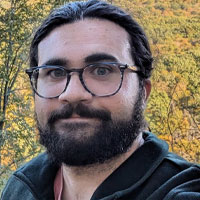 Daniel Meyer is a third-year PhD Student working with David Knowles to develop new machine learning methods for better understanding biology at the level of genomics. He is particularly interested in the faithful modeling of biology in computational methods and how utilizing data from different species can help better inform us about the mechanisms of genetic regulation and how they relate to disease.
Mayer graduated with a Bachelor of Science in Computer Science from Tufts University in 2018 and worked at the Broad Institute of MIT and Harvard as a Computational Associate from 2018-2023. He is a proud dog dad, bread baker, bassoonist, and Linux evangelist.
NSF Graduate Research Fellowships Program
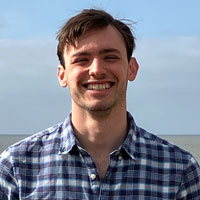 Jacob Blindenbach is a fourth-year PhD student in the G2Lab, advised by Gamze Gursoy. His research focuses on secure and privacy-preserving computation for genomics. In 2022, Jacob graduated from the University of Virginia with a bachelor’s degree in Mathematics and Computer Science, where he was a Rodman Scholar.
In his spare time, he enjoys swimming and Citi-biking around New York City.
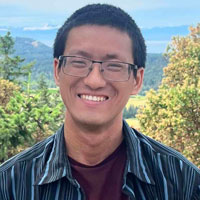 Gabriel Chuang is a third-year PhD student advised by Augustin Chaintreau and Cliff Stein. His research interests are in social networks, machine learning, and elections, especially as they pertain to issues of fairness.
Chuang received his BS in Computer Science from Carnegie Mellon University in 2022. He enjoys board games, drawing, and being active in the Catholic community at Columbia.
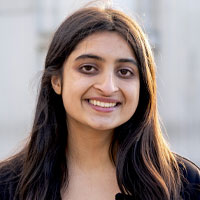 Reya Vir is a first-year PhD student in the DAPLab, advised by Eugene Wu, Zhou Yu, and Lydia Chilton. Her research interests focus on agentic AI systems, specifically coding agents, as well as natural language processing and interactive ML systems.
Before Columbia, she was a software engineer at AWS Redshift, and received her Bachelor in Computer Science from UC Berkeley, where she conducted research at BAIR and EPIC Data lab. In her free time, she loves figure skating (and all kinds of sports), hiking, and trying new coffee shops.
NDSEG Fellowship
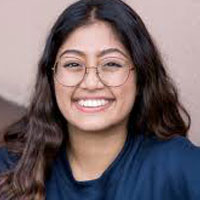 Sweta Karlekar is a third-year Ph.D. student, advised by David Blei. Her research specializes in machine learning, Bayesian statistics, causal inference, and natural language processing. Her academic training includes coursework in probabilistic graphical models and machine learning, computation and the brain, and natural language processing.
Karlekar earned a BS in Computer Science with a minor in Entrepreneurship from the University of North Carolina at Chapel Hill in 2020. During her undergraduate studies, she was supported by numerous scholarships, including the STEM Diversity Scholarship and the Chancellor’s Science Scholarship (full academic merit award), and was inducted into Phi Beta Kappa, Sigma Xi Scientific Research Honor Society, and Honors Carolina.
In her free time, Karlekar enjoys volunteering for tech-for-social-good causes. Most recently, as a Data Science Fellow on NC-Senate District 13’s Democratic Campaign through Bluebonnet Data. She also loves to bake, cook, watch TV, read sci-fi and fantasy, and paint little rocks.
SEAS Fellowships
Veterans Fellowship
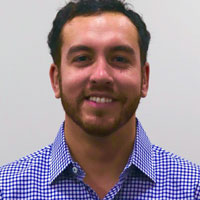 Justin Beltran is a first-year Ph.D. student, working under the guidance of Dan Rubenstein and Salvatore Stolfo. His research is broadly focused on quantum computing, with an emphasis on applying quantum algorithms to classical network problems and computer science. His interests include quantum algorithms for algebraic problems and quantum engineering, particularly modeling calibration errors in physical quantum systems.
He earned his bachelor’s degree in mathematics from Columbia University in 2025 and was a recipient of the Yellow Ribbon Scholarship as an undergraduate. Outside of research, he is a licensed private pilot (PPL) and a D-licensed skydiver.
Teaching Fellows
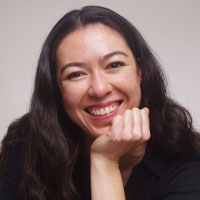 Miranda Christ is a sixth-year PhD student co-advised by Tal Malkin and Mihalis Yannakakis. She is a member of the Theory Group and the Crypto Lab, and her research focuses on giving a theoretical treatment to emerging problems in cryptography, such as watermarks for AI-generated content and distributed randomness generation. Recently, she has been especially interested in the intersection of cryptography and machine learning, and she is currently teaching an advanced graduate course on this topic.
Christ is also a Fulbright Scholar. She graduated magna cum laude from Brown University in 2020 with a Sc.B. in Mathematics-Computer Science. Outside of work, Miranda can be found at the bouldering gym or climbing outdoors.
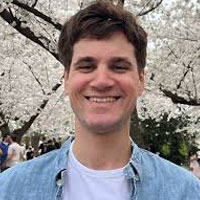 Maxwell Levatich is a sixth-year Ph.D. candidate, advised by Stephen Edwards. His research focuses on developing scalable, static dataflow analyses for C programs that maintain soundness even in the face of undecidable pointer analysis. His work draws inspiration from iterative, constraint-based techniques in symbolic model checking and program verification, his initial area of study.
He earned both his B.S. and M.S. in Computer Science from Yale University in 2020. He is also interested in teaching introductory computer science to diverse groups of emerging programmers. In Fall 2026, he will join the faculty at the University of Chicago as a full-time Assistant Instructional Professor. Outside of research, he enjoys video game development.
Presidential Fellowship
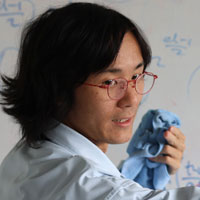 Baitian Li is a first-year Ph.D. student in the theoretical computer science group, advised by Josh Alman and Toniann Pitassi. His research focuses on algorithms and computational complexity, with a particular emphasis on the power and limitations of algebraic computation.
Li received his B.Eng. in Computer Science from the Institute for Interdisciplinary Information Sciences at Tsinghua University in 2025. In his free time, he considers himself a “dreamer,” in the spirit of White Nights by Fyodor Dostoevsky.
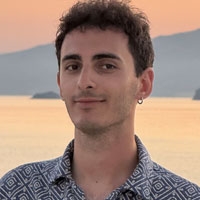 Nikos Pagonas is a second-year PhD student in Columbia’s Data, Agents, and Processes Lab (DAPLab), advised by Kostis Kaffes. His research focuses on improving the performance and efficiency of agentic serving. He builds systems that exploit workflow structure and runtime characteristics to optimize scheduling, resource allocation, and model routing.
In Summer 2025, Nikos was a Research Intern at Google, where he worked on Cortex, a workflow-aware agentic serving system. Before joining Columbia, he was a member of the ATLAS research group at Brown University, where he worked on PaSh, a Linux Foundation project.
Pagonas received his master’s degree in Electrical and Computer Engineering from the National Technical University of Athens (NTUA). He is a recipient of the Columbia Presidential Fellowship, as well as scholarships from the A.G. Leventis Foundation and the Gerondelis Foundation.
In his free time, Nikos enjoys singing, playing music, learning new languages, traveling, and exploring New York’s culinary scene.
Tang Fellowship
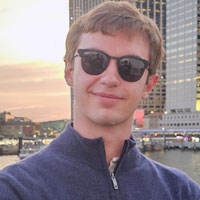 Giorgio Cavicchioli is a first-year PhD student co-advised by Roxana Geambasu and Jason Nieh. His research interests lie at the intersection of security and large-scale distributed infrastructure, with a core focus on digital privacy.
Artificial Intelligence & Autonomous Systems Fellowship
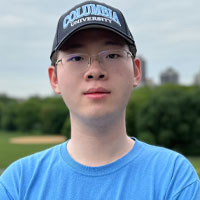 Jiakai Xu is a PhD student in Computer Science at Columbia University, co-advised by Prof. Kostis Kaffes and Prof. Eugene Wu in the DAPLab. His research focuses on systems infrastructure for AI and autonomous workloads, including lightweight snapshot and restore mechanisms, virtualization techniques, and efficient GPU scheduling for large language model serving.
He is broadly interested in the intersection of computer systems, programming languages, and software architecture, with an emphasis on designing robust abstractions that improve the scalability, efficiency, and reproducibility of AI-driven systems.
In addition to his research, Jiakai has served as a Head Teaching Assistant for three years, mentoring students and contributing to large-scale systems education. He previously earned dual bachelor’s degrees in Computer Science from Columbia University and the City University of Hong Kong through the Joint Bachelor’s Degree Program, as well as a master’s degree from Columbia.
 Add to GMail