

Can AI Understand Literature? Columbia Researchers Put It to the Test
Large language models can process vast amounts of text—but their ability to interpret nuance, hidden meaning, and nonlinear storytelling remains an open question.
Large language models can process vast amounts of text—but their ability to interpret nuance, hidden meaning, and nonlinear storytelling remains an open question.
Researchers from the department are presenting their work at the ACM International Conference on Architectural Support for Programming Languages and Operating Systems (ASPLOS 2026). At ASPLOS, some of the most forward-looking ideas in computer systems research come together—from the way hardware is designed to how software actually runs on it. As one of the field’s premier interdisciplinary venues, the conference highlights work at the intersection of computer architecture, programming languages, and operating systems, often tackling the real-world challenges behind performance, scalability, and security.
Radshield: Software Radiation Protection for Commodity Hardware in Space
Abstract:
Exponentially declining launch costs have led to an explosion of inexpensive satellites launched to space, often equipped with off-the-shelf chips. These chips, however, lack hardware radiation protection, leaving them vulnerable to space radiation. We thus design Radshield, a software system protecting against the two most ubiquitous and costly radiation fault scenarios: (a) radiation-induced short-circuits that lead to permanent hardware failure; and (b) radiationinduced transient charges that result in single-bit silent data corruption (SDC). Radshield counters these failure scenarios with two components. First, it uses a short-circuit detector that can detect tiny increases in the device’s current draw by estimating the normal current draw when resource utilization is low. Second, it duplicates the execution of spacecraft workloads in a CPU and memory-efficient manner, and catches SDCs even when they affect the CPU’s pipeline or cache. In our experiments, we show Radshield is very effective at preventing both errors, and is 1.4−35.5× more power-efficient than the state-of-the-art protection mechanisms in detecting SDC. Radshield is deployed on missions in low-earth orbit and in deep space.
Highly Automated Verification of Security Properties for Unmodified System Software
Abstract:
System software is often complex and hides exploitable security vulnerabilities. Formal verification promises bug-free software but comes with a prohibitive proof cost. We present Spoq2, the first verification framework to highly automate security verification of unmodified system software. Spoq2 is based on the observation that many security properties, such as noninterference, can be reduced to establishing inductive invariants on individual transitions of a transition system that models system software. However, directly verifying such invariants for real system code overwhelms existing SMT solvers. Spoq2 makes this possible by automatically reducing verification complexity. It decomposes transitions into individual execution paths, extends cone-of-influence analysis to the individual transition level, and eliminates irrelevant machine states, clauses, and control-flow paths before invoking the SMT solver. Spoq2 further optimizes how pointer operations are modeled and verified through pointer abstractions that eliminate expensive bit-wise operations from SMT queries. We demonstrate the effectiveness of Spoq2 by verifying security properties of four unmodified, real-world system codebases with minimal manual effort.
Enabling Fast Networking in the Public Cloud
Abstract:
Despite a decade of research, most high-performance userspace network stacks remain impractical for public cloud tenants developing their applications atop Virtual Machines (VMs). We identify two root causes: (1) reliance on specialized NIC features (e.g., flow steering, deep buffers) absent in commodity cloud vNICs, and (2) rigid execution models ill-suited to diverse application needs. We present Machnet, a high-performance and flexible userspace network stack designed for public cloud VMs. Machnet uses only a minimal set of NIC features that any major cloud provider supports. It also relies on a microkernel architecture to enable flexible application execution. We evaluate Machnet across three major public clouds and on production-grade applications, including a key-value store, an HTTP server, and a state-machine replication system. We release Machnet at https://github.com/microsoft/machnet.
Wave: Offloading Resource Management to SmartNIC Cores
SmartNICs are increasingly deployed in datacenters to offload tasks from server CPUs, improving the efficiency and flexibility of datacenter security, networking, and storage. Optimizing cloud server efficiency in this way is critically important to ensure that virtually all server resources are available to paying customers. Userspace system software, specifically, decision-making tasks performed by various operating system subsystems, is particularly well-suited for execution on mid-tier SmartNIC ARM cores. To this end, we introduce Wave, a framework for offloading userspace system software to processes/agents running on the SmartNIC.Wave uses Linux userspace systems to better align system functionality with SmartNIC capabilities. It also introduces a new host-SmartNIC communication API that enables offloading of even µ s-scale system software. To evaluate Wave,we offloaded preexisting userspace system software, including kernel thread scheduling, memory management, and an RPC stack to SmartNIC ARM cores, which showed a performance degradation of 1.1%-7.4% in an apples-to-apples comparison with on-host implementations. Wave recovered host resources consumed by on-host system software for memory management (saving 16 host cores), RPCs (saving 8 host cores), and virtual machines (an 11.2% performanceimprovement). Wave highlights the potential for rethinking system software placement in modern datacenters, unlocking new opportunities for efficiency and scalability.
A research project backed by Kathy McKeown aims to advance both computational understanding and humanistic interpretation of how multimodal models generate and understand art images through probing of a model’s latent space.
Vishal Misra discusses his latest research on how LLMs work under the hood and explains what’s actually required for AGI: the ability to keep learning after training and the shift from pattern matching to understanding cause and effect.
One of the most influential programming languages in history was created by Columbia professor Bjarne Stroustrup, almost by accident.
Henning Schulzrinne is a pioneer in the development of internet and video calling technology. His work on voice-over-IP helped lay the foundation for the tools millions of people use every day to talk, meet, and collaborate online. From the technical standards that enable real-time communication to public-safety innovations like text-to-911, his research sits at the intersection of engineering, technology, and public policy. Listen to Schulzrinne talk about his work and how the systems behind the internet make modern communication possible.
The new space in Schermerhorn Hall will support collaborative learning and community connection among students and faculty.
From advancing AI and quantum computing to improving systems and security, PhD students are shaping the future of technology through cutting-edge research. Their work has earned national recognition, including prestigious fellowships that support their innovation and academic excellence. Meet the scholars whose research and achievements are making an impact across computer science and beyond.
 Zachary Horvitz is a fourth-year Ph.D. student advised by Kathleen McKeown and Zhou Yu. His research focuses on generative language models, including diffusion and alternative pre-training objectives, as well as inference-time scaling and control. He is particularly interested in reasoning and controllability in language models, evaluation of rare and harmful behaviors in generative AI, and AI for healthcare.
Horvitz received an A.B. in Computer Science and Anthropology (2019) and an Sc.M. in Computer Science (2020) from Brown University. His work has been recognized with the CAIT Fellowship (2024) and an Outstanding Paper Award from the Association for Computational Linguistics (ACL) in 2024. Outside of research, he enjoys playing frisbee, reading science fiction, and practicing calisthenics.
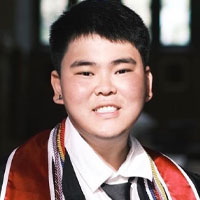 Tao Long is a fourth-year PhD student, advised by Lydia Chilton. Working on human–AI interaction, Tao’s research explores how humans collaborate with generative AI systems and AI agents over time, focusing on making AI tools more usable, useful, trustworthy, reliable and seamlessly integrated into everyday productivity practices. Specifically, Tao builds human–AI and agentic systems that reduce cognitive and temporal effort for challenging or complex tasks, offload work to AI while maintaining human ownership and authenticity and fit naturally into users’ existing processes for writers, developers, designers, event organizers and many other communities.
Before starting his PhD, Long earned a BS Summa Cum Laude from Cornell University.
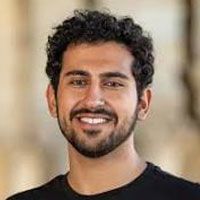 Rashid Al-Abri is a third-year PhD student advised by Gamze Gürsoy. His research centers on developing algorithms and machine learning methods to address challenges in genomics and multi-modal data integration. His recent work includes ScatTR, a method for estimating the length of long tandem repeats in the genome, which he presented at RECOMB 2025. As a Columbia Center for AI Technology PhD Fellow, he is also working on developing multi-modal large language models for functional genomics.
Before his PhD, Al-Abri received a Takatuf Oman International Scholarship and graduated from Stanford University with a BS in Computer Science, where he co-authored a 2023 Nature study on tandem repeat expansions in cancer. In his free time, he is passionate about cooking, biking, and bouldering.
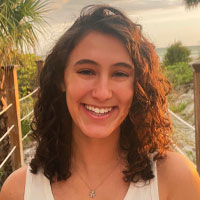 Hadleigh Schwartz is a fourth-year PhD student, advised by Xia Zhou, Dan Rubenstein, and Vishal Misra. Her research focuses on developing content authenticity and media provenance technologies for audio and video. Previously, she worked on the computer vision aspects of several laser-based sensing and communication platforms and spent a summer at NASA’s Jet Propulsion Laboratory developing simulation tools for validating vision-based spacecraft navigation and landing systems. She a recipient of a Columbia SEAS Presidential Distinguished Fellowship and an Amazon CAIT PhD Fellowship.
Schwartz graduated summa cum laude and Phi Beta Kappa from the University of Chicago in 2022, earning a BA and an MS in computer science. In her free time, she enjoys cooking, baking, playing guitar, and running.
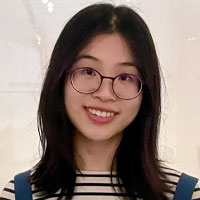 Honglin Chen is a fifth-year PhD student advised by Changxi Zheng. Her research interests lie at the intersection of physical simulation, optimization, and machine learning. In her research, she develops numerical and machine learning techniques to improve physical simulation or, conversely, use physical and geometric information to enhance real-world 3D tasks.
Before coming to Columbia, Chen received her MSc in Computer Science from the University of Toronto in 2021, advised by David I.W. Levin, and her B.Eng. in Computer Science from Zhejiang University in 2019. She interned at Adobe, Meta, Nvidia, and Microsoft Research Asia during her studies. Outside of research, Honglin enjoys running, photography, traveling, and visiting museums and art exhibitions in New York City.
 Lisa DiSalvo is a first-year PhD student currently interested in participatory design and digital civics, with a focus on informational democratization. Her research explores how communities can more equitably produce, interpret, and govern neighborhood information systems and public-facing urban technologies. She is also particularly interested in accessibility and literacy support using LLM-based tools to help residents better navigate and participate in public systems. She works with Brian A. Smith in the CEAL Lab.
DiSalvo was a Bridge to PhD Scholar at Columbia University from 2023–2025. She graduated from Arcadia University in 2023 with a BS in Computer Science. She is a DREU Alumni and a current Hispanic Scholarship Fund (HSF) Scholar. Outside of research, she enjoys playing rugby, teaching afterschool STEM courses, and playing video games.
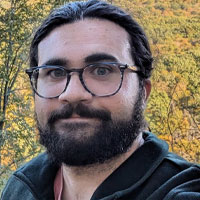 Daniel Meyer is a third-year PhD Student working with David Knowles to develop new machine learning methods for better understanding biology at the level of genomics. He is particularly interested in the faithful modeling of biology in computational methods and how utilizing data from different species can help better inform us about the mechanisms of genetic regulation and how they relate to disease.
Mayer graduated with a Bachelor of Science in Computer Science from Tufts University in 2018 and worked at the Broad Institute of MIT and Harvard as a Computational Associate from 2018-2023. He is a proud dog dad, bread baker, bassoonist, and Linux evangelist.
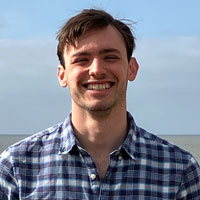 Jacob Blindenbach is a fourth-year PhD student in the G2Lab, advised by Gamze Gursoy. His research focuses on secure and privacy-preserving computation for genomics. In 2022, Jacob graduated from the University of Virginia with a bachelor’s degree in Mathematics and Computer Science, where he was a Rodman Scholar.
In his spare time, he enjoys swimming and Citi-biking around New York City.
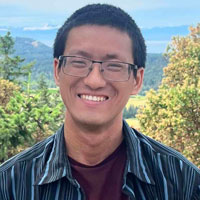 Gabriel Chuang is a third-year PhD student advised by Augustin Chaintreau and Cliff Stein. His research interests are in social networks, machine learning, and elections, especially as they pertain to issues of fairness.
Chuang received his BS in Computer Science from Carnegie Mellon University in 2022. He enjoys board games, drawing, and being active in the Catholic community at Columbia.
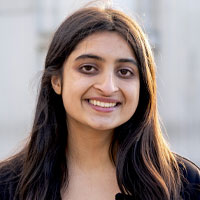 Reya Vir is a first-year PhD student in the DAPLab, advised by Eugene Wu, Zhou Yu, and Lydia Chilton. Her research interests focus on agentic AI systems, specifically coding agents, as well as natural language processing and interactive ML systems.
Before Columbia, she was a software engineer at AWS Redshift, and received her Bachelor in Computer Science from UC Berkeley, where she conducted research at BAIR and EPIC Data lab. In her free time, she loves figure skating (and all kinds of sports), hiking, and trying new coffee shops.
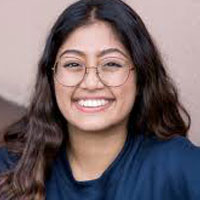 Sweta Karlekar is a third-year Ph.D. student, advised by David Blei. Her research specializes in machine learning, Bayesian statistics, causal inference, and natural language processing. Her academic training includes coursework in probabilistic graphical models and machine learning, computation and the brain, and natural language processing.
Karlekar earned a BS in Computer Science with a minor in Entrepreneurship from the University of North Carolina at Chapel Hill in 2020. During her undergraduate studies, she was supported by numerous scholarships, including the STEM Diversity Scholarship and the Chancellor’s Science Scholarship (full academic merit award), and was inducted into Phi Beta Kappa, Sigma Xi Scientific Research Honor Society, and Honors Carolina.
In her free time, Karlekar enjoys volunteering for tech-for-social-good causes. Most recently, as a Data Science Fellow on NC-Senate District 13’s Democratic Campaign through Bluebonnet Data. She also loves to bake, cook, watch TV, read sci-fi and fantasy, and paint little rocks.
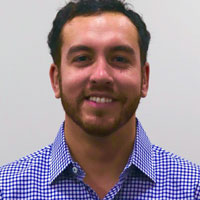 Justin Beltran is a first-year Ph.D. student, working under the guidance of Dan Rubenstein and Salvatore Stolfo. His research is broadly focused on quantum computing, with an emphasis on applying quantum algorithms to classical network problems and computer science. His interests include quantum algorithms for algebraic problems and quantum engineering, particularly modeling calibration errors in physical quantum systems.
He earned his bachelor’s degree in mathematics from Columbia University in 2025 and was a recipient of the Yellow Ribbon Scholarship as an undergraduate. Outside of research, he is a licensed private pilot (PPL) and a D-licensed skydiver.
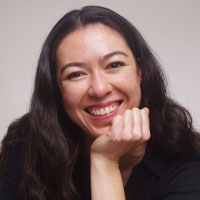 Miranda Christ is a sixth-year PhD student co-advised by Tal Malkin and Mihalis Yannakakis. She is a member of the Theory Group and the Crypto Lab, and her research focuses on giving a theoretical treatment to emerging problems in cryptography, such as watermarks for AI-generated content and distributed randomness generation. Recently, she has been especially interested in the intersection of cryptography and machine learning, and she is currently teaching an advanced graduate course on this topic.
Christ is also a Fulbright Scholar. She graduated magna cum laude from Brown University in 2020 with a Sc.B. in Mathematics-Computer Science. Outside of work, Miranda can be found at the bouldering gym or climbing outdoors.
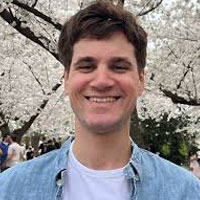 Maxwell Levatich is a sixth-year Ph.D. candidate, advised by Stephen Edwards. His research focuses on developing scalable, static dataflow analyses for C programs that maintain soundness even in the face of undecidable pointer analysis. His work draws inspiration from iterative, constraint-based techniques in symbolic model checking and program verification, his initial area of study.
He earned both his B.S. and M.S. in Computer Science from Yale University in 2020. He is also interested in teaching introductory computer science to diverse groups of emerging programmers. In Fall 2026, he will join the faculty at the University of Chicago as a full-time Assistant Instructional Professor. Outside of research, he enjoys video game development.
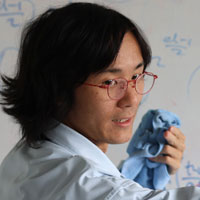 Baitian Li is a first-year Ph.D. student in the theoretical computer science group, advised by Josh Alman and Toniann Pitassi. His research focuses on algorithms and computational complexity, with a particular emphasis on the power and limitations of algebraic computation.
Li received his B.Eng. in Computer Science from the Institute for Interdisciplinary Information Sciences at Tsinghua University in 2025. In his free time, he considers himself a “dreamer,” in the spirit of White Nights by Fyodor Dostoevsky.
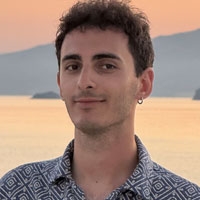 Nikos Pagonas is a second-year PhD student in Columbia’s Data, Agents, and Processes Lab (DAPLab), advised by Kostis Kaffes. His research focuses on improving the performance and efficiency of agentic serving. He builds systems that exploit workflow structure and runtime characteristics to optimize scheduling, resource allocation, and model routing.
In Summer 2025, Nikos was a Research Intern at Google, where he worked on Cortex, a workflow-aware agentic serving system. Before joining Columbia, he was a member of the ATLAS research group at Brown University, where he worked on PaSh, a Linux Foundation project.
Pagonas received his master’s degree in Electrical and Computer Engineering from the National Technical University of Athens (NTUA). He is a recipient of the Columbia Presidential Fellowship, as well as scholarships from the A.G. Leventis Foundation and the Gerondelis Foundation.
In his free time, Nikos enjoys singing, playing music, learning new languages, traveling, and exploring New York’s culinary scene.
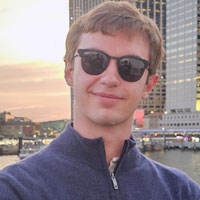 Giorgio Cavicchioli is a first-year PhD student co-advised by Roxana Geambasu and Jason Nieh. His research interests lie at the intersection of security and large-scale distributed infrastructure, with a core focus on digital privacy.
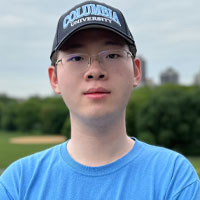 Jiakai Xu is a PhD student in Computer Science at Columbia University, co-advised by Prof. Kostis Kaffes and Prof. Eugene Wu in the DAPLab. His research focuses on systems infrastructure for AI and autonomous workloads, including lightweight snapshot and restore mechanisms, virtualization techniques, and efficient GPU scheduling for large language model serving.
He is broadly interested in the intersection of computer systems, programming languages, and software architecture, with an emphasis on designing robust abstractions that improve the scalability, efficiency, and reproducibility of AI-driven systems.
In addition to his research, Jiakai has served as a Head Teaching Assistant for three years, mentoring students and contributing to large-scale systems education. He previously earned dual bachelor’s degrees in Computer Science from Columbia University and the City University of Hong Kong through the Joint Bachelor’s Degree Program, as well as a master’s degree from Columbia.
Janie Zhang is studying computer science and psychology, exploring the overlap between human behavior and artificial intelligence.
The new space in Schermerhorn Hall will support collaborative learning and community connection among students and faculty.
How research that began in the lab is transforming factory automation.
Henry Yuen is developing a new mathematical language to describe problems whose inputs and outputs aren’t ordinary numbers.
Moti Yung (PhD’88) is recognized for contributions to cryptography and its applications in information technology systems.
The honor recognizes their influential contributions to trustworthy AI, software systems, computer architecture, and design automation.
In the Ethical and Responsible Artificial Intelligence classroom, the discussion about artificial intelligence (AI) drifted quickly from lecture slides to existential speculation. Several students raised their hands at once, steering the conversation toward a familiar set of questions: “Will AI become sentient? Could it eventually harm humanity? Are we creating something we won’t be able to control?” The energy in the room shifted as the conversation edged toward science-fiction territory, reflecting broader public anxieties about runaway technology.
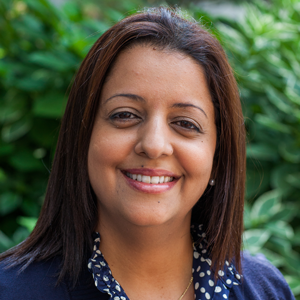
“We don’t need to worry about some future superintelligence to see AI causing harm,” said Ansaf Salleb-Aouissi to her summer class of 32 students. “The harm is happening right now.”
The Senior Lecturer continued by describing how there are AI systems with biased hiring algorithms, discriminatory lending systems, and facial recognition systems that fail for people with darker skin, and how these present-day problems are affecting real people. As artificial intelligence rapidly moves from research labs into everyday decision-making systems, the “question is no longer just what AI can do, but how it should be built and deployed responsibly.”
The development of a dedicated course on AI ethics grew out of both global dialogue and hands-on research experience. After participating in an international symposium as a keynote speaker on AI and inclusion, Salleb-Aouissi realized that ethical considerations couldn’t be treated as side discussions; they needed to be embedded directly into how AI is taught and practiced.
That urgency was reinforced through a research project focused on predicting adverse pregnancy outcomes such as premature birth and preeclampsia. The work highlighted a critical reality: highly accurate models can still fail ethically. In this case, the population was mostly White patients, and African Americans composed about 25 percent. The model didn’t perform well with the small sample, so they had to employ post-processing techniques to mitigate bias and improve the model’s performance. These experiences shaped the course’s core philosophy: AI systems must be not only accurate but also fair, interpretable, and trustworthy, and students need practical training to achieve that.
We sat down with Salleb-Aouissi to learn more about the course and why it is essential to think about ethics in AI.
Q: What classroom topic tends to spark the most debate?
One discussion that consistently generates strong debate is the debate between group fairness and individual fairness.
Here’s the question I pose: Should we ensure fairness at the group level, for example, by checking that women and men get hired at equal rates? Or should we ensure that similar individuals get treated similarly, regardless of which group they belong to?
Students initially think these should be the same thing, but they quickly discover they can conflict. You might achieve group parity while treating similar individuals very differently. Or you might treat similar individuals the same way but end up with significant disparities between groups.
Students have genuinely different intuitions about which approach is more fair. Some argue that group fairness addresses systemic discrimination and historical inequities. Others argue that individual fairness is what fairness truly means: treating people based on their individual characteristics, rather than their group membership.
There’s no silver bullet. Both approaches have merit, and the choice often depends on the specific context and the desired outcome. The realization that fairness itself is contested and context-dependent is one of the most important lessons students take from the course.
Q: How do you integrate technical learning with ethical reasoning?
I don’t have a philosophical background, but I connect every ethical dimension back to its intellectual foundations and societal implications.
The key is showing students that technical choices embody ethical commitments. When we discuss fairness metrics, we don’t just compute them; we ask what conception of justice each one assumes. I use case studies where technical decisions had real ethical consequences: bias in criminal risk assessment, privacy violations in contact tracing, interpretability failures in medical diagnosis.
The goal is for students to see that ethical AI requires both technical expertise and ethical reasoning, as they’re inseparable.
Q: What do you hope students take away from the course?
I want students first to be aware of the ethical dimensions of every AI system they encounter or build: recognizing fairness questions, privacy implications, and interpretability needs as fundamental considerations, not afterthoughts.
Second, I want them to have practical tools. Ethical AI requires concrete skills: techniques for bias detection and mitigation, methods for building interpretable models, and frameworks for privacy-preserving systems.
Finally, I hope they will feel responsibility and become advocates for ethical AI in their organizations by asking hard questions, challenging problematic practices, and championing ethical principles even when it’s difficult. As AI practitioners, they have real power to shape how these systems affect people’s lives.
Q: How are AI ethics challenges likely to evolve?
We’ll see progress in areas like privacy and fairness as techniques mature and transition from research to production. But other areas remain challenging. Interpretability is tough, especially with large language models. Robustness and safety concerns are growing as systems become more autonomous.
New challenges are also emerging: AI-generated content, consent issues with training data, and accountability when systems interact unpredictably.
The course stays current by continuously incorporating recent research, industry case studies, and regulatory changes.
Q: For someone curious about AI ethics but not from a technical background, what’s one idea or question from the course that might resonate with them?
They need to question AI. Be aware of its progress and understand how it affects them now and, in the future, as well as its broader impact on society.
This matters to everyone, not just technical people, because AI increasingly shapes decisions that affect all our lives, from the content we see online to whether we get a loan, a job, or access to healthcare. Understanding and questioning AI is essential for participating in conversations about how these systems should work and whom they should serve.
Advanced Programming is a required course for computer science majors, typically taken during their sophomore year, that focuses on the C programming language. The course serves as the bridge between introductory and advanced classes, and it has a widespread reputation for its exceedingly difficult content and Lee’s deliberately grueling approach.
Research isn’t just for graduate students. This year, three SEAS students have been honored with the 2026 CRA Outstanding Undergraduate Researcher Award, recognizing their dedication, originality, and influence in their fields. Nominated by faculty, their work demonstrates how undergraduate research can drive real innovation and discovery.
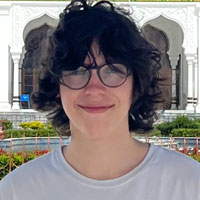 Szymon Snoeck – Finalist
Szymon Snoeck is a fourth-year applied mathematics major in SEAS with a minor in computer science. He has spent the past two years working as a teaching assistant and conducting research with Senior Lecturer Nakul Verma and PhD student Noah Bergam. Their work has led to two research papers accepted at conferences: one showing that practitioners cannot reliably infer the existence of clusters from t-SNE visualizations alone (under review at ICLR 2026), and another demonstrating that preserving local neighborhood structure in low-dimensional embeddings is broadly impossible (ALT 2026). Together, these papers are among the first to provide a theoretical foundation for how data visualization can produce misleading interpretations.
Szymon is currently investigating the broader problem of faithful low-dimensional representations of high-dimensional data, with a focus on providing rigorous theoretical guarantees which are largely missing from existing literature.
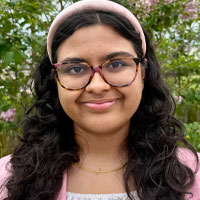 Sharanya Chatterjee – Honorable Mention
Sharanya Chatterjee is a sophomore in SEAS studying computer science and applied mathematics. She does computational cancer biology research in the Azizi Lab under the mentorship of Associate Professor Elham Azizi. Sharanya worked on Echidna, a new statistical model (with a manuscript currently under revision at Nature Methods) that helps researchers understand how genetic changes influence the way cells adapt and change their behavior. She has also studied pancreatic cancer, using data science and machine learning to track how cancer cells evolve over time and become more flexible or treatment-resistant.
Currently, Sharanya is investigating the rare phenomenon of spontaneous cancer regression in chronic lymphocytic leukemia by combining multiple types of genetic and cellular data. Before joining the Azizi Lab, she did research at the University of Florida, where she helped build a “digital twin” model to study how low-oxygen conditions affect lung blood vessel cells.
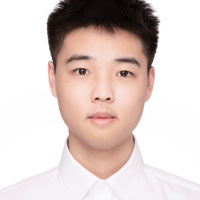 Tianle Zhou – Honorable Mention
Tianle Zhou is a senior in SEAS studying computer science and an undergraduate researcher in the DAPLab, working under the guidance of Associate Professor Eugene Wu and Assistant Professor Kostis Kaffes. He began working in the lab in Spring 2025, where he contributed to a dataset search system project and, by the summer, was leading his own research effort. This work resulted in a prototype system for efficiently checkpointing agent-driven exploration and served as the basis for a paper presented at the Systems for Agentic AI workshop at the Symposium on Operating Systems Principles (SOSP 25) in October 2025.
He continues to investigate how autonomous agents can be effectively supported in real-world, stateful system environments, with a particular focus on the challenges that emerge when agents are deployed for complex, multi-step tasks. His ongoing work has led to multiple research papers currently under submission to leading conferences.
The recognition showcases a dynamic research community where undergraduates are supported in exploring new ideas and achieving academic excellence. Faculty frequently welcome undergraduate researchers, and interested students are encouraged to connect with professors to learn more.
Nakul Verma works closely with multiple undergraduate students on various theoretical and practical machine learning projects. Students should be highly motivated and must demonstrate a strong understanding of machine learning models. Interested students can email Prof. Verma directly with their CV and other relevant materials.
Elham Azizi welcomes motivated Columbia undergraduate students who are passionate about bridging computational sciences and cancer biology to apply to the Azizi Lab. Students should commit to research spanning at least two semesters. Email Elham (elham AT azizilab DOT com) with your CV, major, and research interests.
Eugene Wu is co-director of the Data, Agents, and Processes Lab (DAPLab), which brings together 14 faculty and ~25 PhDs on the topics of AI agents and automation. The lab maintains a list of active projects, and students with the appropriate background and interest can apply via the lab website: dap.cs.columbia.edu.
Li’s research focuses on quantum computing, and she plans to pursue an MPhil in Advanced Computer Science at Churchill College, Cambridge.
The department is proud to welcome new faculty whose expertise strengthens our academic mission and expands our research and teaching horizons. More than new appointments, they bring fresh ideas, energy, and a shared commitment to excellence in scholarship, mentorship, and discovery.
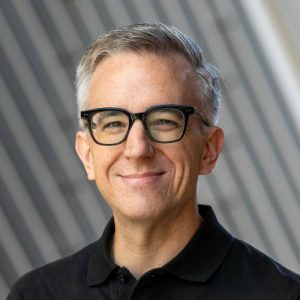
Chris Murphy
Senior Lecturer in Discipline
PhD, Columbia University
Research Area: Computer Science education, software testing
Murphy is a teaching faculty member who teaches courses on software quality, introductory programming, and software development. His current academic interests include student mental health, diversity, equity, inclusion, and accessibility in computer science, as well as software engineering education and software testing.
This semester, he will be teaching COMS 1004 Introduction to Computer Science and Programming in Java. It is the introductory course for CS majors and Engineering students, and covers algorithmic thinking, basic programming, and software development skills. Additionally, generative AI will be incorporated into the course, enabling students to learn how to utilize it as a tool for developing, testing, analyzing, and improving software.
Murphy received his BS from Boston University in 1995 and his PhD from Columbia Engineering in 2010. He previously served as a faculty member at the University of Pennsylvania and Bryn Mawr College, earning teaching awards in 2019 and 2023, respectively. He was also a visiting faculty member at Swarthmore College and has worked as a professional software developer in Boston, San Francisco, and London.
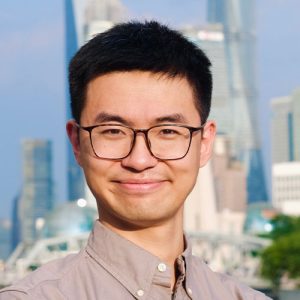
Zhuo Zhang
Assistant Professor
PhD, Purdue University
Research Area: Security
Zhang is a computer security researcher whose work focuses on AI-enabled security, software vulnerabilities, and practical attack and defense techniques.
He is the recipient of the ACM SIGSAC Doctoral Dissertation Award and has received multiple best-paper honors, including an OOPSLA 2019 Distinguished Paper Award and a CCS 2024 Distinguished Paper Award. He has also achieved strong results in competitive security, including numerous CTF wins.
This semester, Zhang is teaching COMS 4995, AI for Software Security, which examines how AI is changing the way security vulnerabilities are discovered and analyzed in real-world software. He is actively recruiting undergraduate and master’s students to collaborate on projects in reverse engineering, blockchain security, and broader AI-enabled security.
Zhang holds a B.Sc. with Zhiyuan Honors from Shanghai Jiao Tong University (SJTU) (2018) and a PhD from Purdue University (2023).
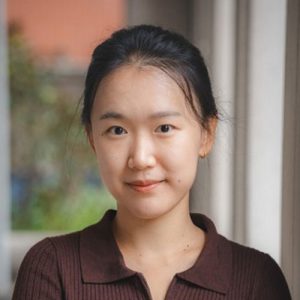
Yining Liu
Lecturer in Discipline
PhD, Columbia University
Research area: Data science instruction
Liu’s research focuses on machine learning and computational biology, with a particular emphasis on data-driven methods for single-cell analysis. She teaches data science and machine learning with an emphasis on practical, hands-on learning. She is passionate about teaching and strives to create an engaging, well-structured learning environment that supports students in exploring their academic curiosity. She will teach COMS 4721: Machine Learning for Data Science this spring.
Liu holds a BA from the University of California, Berkeley (2020) and a PhD from Columbia University (2025).
CS professors have been honored with Test of Time Awards in 2025, distinctions granted annually by premier computer science conferences to research that has demonstrated enduring impact—work that continues to shape the discipline long after its initial publication.
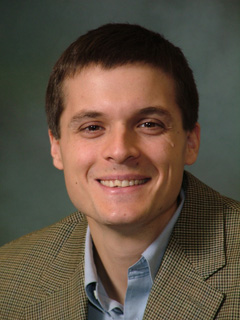
At the 66th Annual Symposium on Foundations of Computer Science (FOCS 2025), Rocco Servedio, Adam T. Kalai, Adam R. Klivans, Yishay Mansour were honored for their 2005 paper, Agnostically Learning Half Spaces. The research delivered a breakthrough in computational learning theory by proving that halfspaces can be efficiently learned under adversarial label noise, overturning prior assumptions of impossibility. Its results reshaped the field, sparking a wave of new advances in learning geometric concepts under more complex noise models and broader distributional settings.
Also at FOCS 2025, Toniann Pitassi, Mika Göös, and Thomas Watson received recognition for their 2015 paper, Deterministic Communication vs. Partition Number. The paper established a separation between the logarithm of the partition number and the deterministic communication complexity of a function, resolving a long‑standing open question and sparking extensive research on lifting theorems. The lifting framework, introduced by Raz and McKenzie, involves proving separations in query complexity and then extending them to communication complexity.
The DAPLab shares highlights from its current research on improving the vibe coding process.
Research from the department was featured at the 66th Annual Symposium on Foundations of Computer Science (FOCS 2025). Several of our faculty and students had their papers accepted, contributing new insights to areas such as algorithms, complexity theory, and cryptography. This digest provides an overview of their work and showcases the innovative research emerging from our community.
Two professors were also recognized with Test of Time Awards. Rocco Servedio was honored for his 2005 paper, Agnostically Learning Half Spaces, and Toniann Pitassi received the award for her 2015 work, Deterministic Communication vs. Partition Number.
Below are the abstracts of the accepted papers.
Faster exact learning of k-term DNFs with membership and equivalence queries
Josh Alman Columbia University, Shivam Nadimpalli (MIT), Shyamal Patel Columbia University, Rocco A. Servedio Columbia University
Abstract:
In 1992 Blum and Rudich [BR92] gave an algorithm that uses membership and equivalence queries to learn k-term DNF formulas over {0, 1} n in time poly(n, 2 k ), improving on the naive O(n k ) running time that can be achieved without membership queries [Val84]. Since then, many alternative algorithms [Bsh95, Kus97, Bsh97, BBB+00] have been given which also achieve runtime poly(n, 2 k ). We give an algorithm that uses membership and equivalence queries to learn k-term DNF formulas in time poly(n) · 2 O˜( √ k) . This is the first improvement for this problem since the original work of Blum and Rudich [BR92]. Our approach employs the Winnow2 algorithm for learning linear threshold functions over an enhanced feature space which is adaptively constructed using membership queries. It combines a strengthened version of a technique that effectively reduces the length of DNF terms from the original work of [BR92] with a range of additional algorithmic tools (attribute-efficient learning algorithms for low-weight linear threshold functions and techniques for finding relevant variables from junta testing) and analytic ingredients (extremal polynomials and noise operators) that are novel in the context of query-based DNF learning.
Embeddings into Similarity Measures for Nearest Neighbor Search
Alexandr Andoni Columbia University, Negev Shekel Nosatzki Columbia University
Abstract:
In this note, we show that one can use average embeddings, introduced recently in [Nao20], to obtain efficient algorithms for approximate nearest neighbor search. In particular, a metric X embeds into ℓ2 on average, with distortion D, if, for any distribution µ on X, the embedding is D Lipschitz and the (square of) distance does not decrease on average (wrt µ). In particular existence of such an embedding (assuming it is efficient) implies a O(D 3 ) approximate nearest neigbor search under X. This can be seen as a strengthening of the classic (bi-Lipschitz) embedding approach to nearest neighbor search, and is another application of data-dependent hashing paradigm.
Generalized Flow in Nearly-linear Time on Moderately Dense Graphs
Shunhua Jiang Columbia University, Michael Kapralov EPFL, Switzerland, Lawrence Li Er Lu University of Toronto, Aaron Sidford Stanford University
Abstract:
In this paper, we consider generalized flow problems where there is an m-edge n-node directed graph G = (V, E) and each edge e ∈ E has a loss factor γe > 0 governing whether the flow is increased or decreased as it crosses edge e. We provide a randomized Oe((m+n 1.5 )·polylog( W δ )) time algorithm for solving the generalized maximum flow and generalized minimum cost flow problems in this setting where δ is the target accuracy and W is the maximum of all costs, capacities, and loss factors and their inverses. This improves upon the previous state-of-theart Oe(m √ n · log2 ( W δ )) time algorithm, obtained by combining the algorithm of [DS08] with techniques from [LS14]. To obtain this result we provide new dynamic data structures and spectral results regarding the matrices associated to generalized flows and apply them through the interior point method framework of [vdBLL+21].
Stronger Cell Probe Lower Bounds via Local PRGs
Oliver Korten Columbia University, Toniann Pitassi Columbia University, Russell Impagliazzo University of California, San Diego
Abstract:
In this work, we observe a tight connection between three topics: NC0 cryptography, NC0 range avoidance, and static data structure lower bounds. Using this connection, we leverage techniques from the cryptanalysis of NC0 PRGs to prove state-of-the-art results in the latter two subjects. Our main result is an improvement to the best known static data structure lower bounds, breaking a barrier which has stood for several decades. Prior to our work, the best known lower bound for any explicit problem with M inputs and N queries was S Nt1(logM)1−t1 for any setting of the word length w (where S= space and t= time) (Siegel ‘89). We prove, for the same class of explicit problems considered by Siegel, a quadratically stronger lower bound of the form S

 Nt2
Nt2 (logM)1−t22−O(w)
 for all even t
 0. Second, for the restricted class of nonadaptive bit probe data structures, we improve on this lower bound polynomially: for all odd constants t1 we give an explicit problem with N queries and M
 NO(1) inputs and prove a lower bound S(Nt2+
 t) for some constant
  t0. Our results build off of an exciting body of work on refuting semi-random CSPs.
We then utilize our explicit cell probe lower bounds to obtain the best known unconditional algorithms for NC0 range avoidance: we can solve any instance with stretch n
 m in polynomial time once mnt2 when t is even; with the aid of an NP oracle we can solve any instance with mnt2−t for t0 when t is odd. Finally, using our main correspondence we establish novel barrier results for obtaining significant improvements to our cell probe lower bounds: (i) near-optimal space lower bounds for an explicit problem with t=4
 w=1 implies EXPNP
 NC1 ; (ii) under the widely-believed assumption that polynomial-stretch NC0 PRGs exist, there is no natural proof of a lower bound of the form SN
 (1) when t=
 (1), w=1.
Kronecker Powers, Orthogonal Vectors, and the Asymptotic Spectrum
Josh Alman Columbia University, Baitian Li Tsinghua University
Abstract:
We study circuits for computing linear transforms defined by Kronecker power matrices. The best-known (unbounded-depth) circuits, including the widely-applied fast Walsh–Hadamard transform and Yates’ algorithm, can be derived from the best-known depth-2 circuits using known constructions, so we focus particularly on the depth-2 case. Recent work [JS13, Alm21, AGP23, Ser22] has improved on decades-old constructions in this area using a new rebalancing approach, but it was unclear how to apply this approach optimally, and the previous versions had complicated technical requirements.
We find that Strassen’s theory of asymptotic spectra can be applied to capture the design of these circuits. This theory was designed to generalize the known techniques behind matrix multiplication algorithms as well as a variety of other algorithms with recursive structure, and it brings a number of new tools to use for designing depth-2 circuits. In particular, in hindsight, we find that the techniques of recent work on rebalancing were proving special cases of the duality theorem which is central to Strassen’s theory. We carefully outline a collection of obstructions to designing small depth-2 circuits using a rebalancing approach, and apply Strassen’s theory to show that our obstructions are complete.
Using this connection, combined with other algorithmic techniques (including matrix rigidity upper bounds, constant-weight binary codes, and a “hole-fixing lemma” from recent matrix multiplication algorithms), we give new improved circuit constructions as well as other applications, including:
• The N ×N disjointness matrix has a depth-2 linear circuit of size O(N 1.2495) over any field. This is the first construction which surpasses exponent 1.25, and thus yields smaller circuits for many families of matrices using reductions to disjointness, including all Kronecker products of 2 × 2 matrices, without using matrix rigidity upper bounds.
• Barriers to further improvements, including that the Strong Exponential Time Hypothesis implies an N1+Ω(1) size lower bound for depth-2 linear circuits computing the Walsh– Hadamard transform (and the disjointness matrix with a technical caveat), and that proving such a N1+Ω(1) depth-2 size lower bound would imply breakthrough threshold circuit lower bounds.
• The Orthogonal Vectors (OV) problem in moderate dimension d can be solved in deterministic time O˜(n · 1.155d ), derandomizing an algorithm of Nederlof and Węgrzycki [NW21], and the counting problem can be solved in time O˜(n · 1.26d ), improving an algorithm of Williams [Wil24] which runs in time O˜(n · 1.35d ). We design these new algorithms by noticing that prior algorithms for OV can be viewed as corresponding to depth-2 circuits for the disjointness matrix, then using our framework for further improvements.
The student-built website displays all dining hall menus in one place, quickly becoming a staple for the student body.
Fellows of the Association for the Advancement of Artificial Intelligence are recognized for making long‑term, impactful contributions to the discipline, typically spanning a decade or more.
 Add to GMail