

Embedded System Design
Spring 2026
|
|
|
| CSEE 4840 Embedded System Design Spring 2026 |
||
Class meets Mondays and Wednesdays, 1:10 - 2:25 PM in 451 CSB.
Mudd 1235 is the lab, which is filled with Linux workstations. Registered students will receive accounts on these machines and 24-hour badge access to this room.
Do the labs in groups of two or three. Project groups should be 3-5 students; aim for 4.
| Name | Office hours | Location | |
|---|---|---|---|
| Prof. Stephen A. Edwards | sedwards@cs.columbia.edu | By appt. | Online |
| Michael Lippe | ml5201@columbia.edu | W 2:30 - 5:30 | 1235 Mudd |
| Ming Gong | ming.g@columbia.edu | Th 4:00 - 6:00 | 1235 Mudd |
| Moises Mata | mm6155@columbia.edu | F 11:00 - 1:00 | 1235 Mudd |
| Aaron Cherian | amc2535@columbia.edu | M 2:30 - 4:30 | 1235 Mudd |
| Xiaoyang Liu | xl3561@columbia.edu | F 9:00A - 11:00A | 1235 Mudd |
Prerequisites: COMS W3827 and COMS W3157 or the equivalent. CSEE W4823 suggested. Embedded system architecture and programming. I/O, analog and digital interfacing, and peripherals. Weekly laboratory sessions and term project on design of a microprocessor-based embedded system including at least one custom peripheral. Knowledge of C programming and digital logic required. Lab required.
This class will introduce you to issues in hardware/software interfacing, practical microprocessor-based system design issues such as bus protocols and device drivers, and practical digital hardware design using modern logic synthesis tools. You will put all of this to use in the lab where you will implement a small embedded system using a combination of C and the SystemVerilog hardware description language.
This is a lab course done in two parts. During the first part of the class, you will implement "canned" designs supplied by the instructor and be given substantial guidance. These are meant to teach you the use of the development tools. In the second part of the class, you will divide up into teams and each will design and implement a project of your own with guidance from the instructor and TAs.
This course is a capstone in which students integrate their knowledge of digital logic, programming, and system design to produce a real system. It is intended to complement ELEN 4340, Computer Hardware Design, and addresses lower-level issues than COMS 6868 Embedded Scalable Platforms or EECS E4764 Internet of Things. CSEE 4840 focuses on hardware/software integration. Students in 4840 will use gates, processors, peripherals, software, and operating systems as building blocks.
CSEE 3827, Fundamentals of Computer Systems or the equivalent. You must understand digital logic design. Prior experience with hardware description languages, FPGAs, or embedded processors is not required.
COMS 3157, Advanced Programming or the equivalent. Specifically, C programming experience. While 4840 will teach you advanced aspects of embedded C programming, you need to come in with significant C experience.
COMS W4823, Advanced Digital Logic Design. While not a formal prerequisite, it is strongly encouraged. In it, you will learn advanced logic design and HDL coding, both of which are crucial to success in 4840.
| Date | Lecture | Notes | Due |
|---|---|---|---|
| Wed Jan 21 | Introduction: Embedded Systems |
 |
|
| Mon Jan 26 | SystemVerilog |
|
|
| Wed Jan 28 | " |
||
| Mon Feb 2 | " |
||
| Wed Feb 4 | Memory |
|
|
| Mon Feb 9 | " |
||
| Wed Feb 11 | Networking, USB, and Threads |
|
|
| Fri Feb 13 | Lab 1
Files 
|
||
| Mon Feb 16 | Video |
|
|
| Wed Feb 18 | Hardware/Software Interfaces |
|
|
| Mon Feb 23 | " |
||
| Wed Feb 25 | " |
||
| Mon Mar 2 | Debugging |
|
|
| Wed Mar 4 | The Avalon Bus |
|
|
| Fri Mar 6 | Lab 2
Files 16 GB SD Card Image
|
||
| Mon Mar 9 | Device Drivers |
|
|
| Wed Mar 11 | " |
||
| Fri Mar 13 | Proposal | ||
| Mar 16-20 | Spring Break | ||
| Mon Mar 23 | IP Cores and Platform Designer |
|
|
| Wed Mar 25 | " |
||
| Mon Mar 30 | Audio Waveforms |
 |
|
| Wed Apr 1 | Tiles and Sprites (No lectures after this day) |
|
|
| Fri Apr 3 | Lab 3
Hardware filesSoftware FIlesKernel Module Env.
|
||
| Mon Apr 6 | |||
| Wed Apr 8 | |||
| Mon Apr 13 | |||
| Wed Apr 15 | |||
| Fri Apr 17 | Design document | ||
| Mon Apr 20 | Design reviews |
||
| Wed Apr 22 | Design reviews |
||
| Mon Apr 27 | |||
| Wed Apr 29 | |||
| Mon May 4 | |||
| Wed May 13 | Final Project Presentations |
You'll perform a design-it-yourself project in the second half of the class. Here are the deliverables:
Project teams should be three students or more.
This document should explain what you're going to build and how you're going to build it, but does not not need to include code. A corrected version of this document that reflects what you actually built should end up in your final project report.
Include the following:
This is a critical part of the project and will be a substantial fraction of the grade.
Include the following sections:
Include all of this in a single .pdf file (don't print it out).
Also create a .tar.gz file (see the online documentation for the `tar' program to see how to create such a file. Briefly, create a file called `myfiles' with the names of all the files you want to include in the archive and run tar zcf project.tar.gz $(cat myfiles) to create the archive.) that just includes the files necessary to build your project, such as I did for the labs.
3D-Hardware-Rasterizer:
(XL) Proposal Design Report Presentation Proposal Design Report Presentation  Files Files Aarush Agarwal, Gianna Belmont Herrera, Srika Chagarlamudi, Shlok Desai, and Venkata Sai Sat Rajampalli |
|
9x9-Go:
(AC)Proposal Design Report Presentation Files Maximilian Comfere and Owen Cooper |
|
AHRS:
(MM)Proposal Design Report Presentation Files Zongyang Li, Darshan Ramakrishnaiah, Jaxson Robinson, and Anubhav Vandkar |
|
Adaptive-Noise-Cancellation:
(ML)Proposal Design Report Presentation Files Huda Jafri, Sayem Kamal, and Sharvani Vadlamani |
|
Air-Hockey:
(SE)Proposal Design Report Presentation Files Derrick Chen, Xuepeng Han, Zening Wang, and Gerald Zhao |
|
Block-Game:
(XL)Proposal Design Report Presentation Files Joshua Bernheisel, Mihir Joshi (0974), and Wesley Maa |
|
Boots-n-Cats-Drum-Machine:
(AC)Proposal Design Report Presentation Files Noel Gomez, Jordan Lin, and Aaron Zhu |
|
GridBrawl:
(MG)Proposal Design Report Presentation Files Siyao Yu, Sitao Zhang, and Anyongyong Zhao |
|
HFT:
(SE)Proposal Design Report Presentation Files Derrick Bassey, Carlos Espinoza, and Jayden Lee-Sin |
|
IR-Beacon-Tracking:
(XL)Proposal Design Report Presentation Files Leen Alshorafa and Kuan Zhang (1002) |
|
Idaho-Trail:
(MM)Proposal Design Report Presentation Files Adam Auer, Xingcan Chen, and Sunny Carlin Qi |
|
LeNet-5-CNN-Accelerator:
(ML)Proposal Design Report Presentation Files Sirui Chen, Tian Li, Chenxi Shen, Yizheng Tang, and Weiwei Wu |
|
Liquid-Physics-Simulator:
(MG)Proposal Design Report Presentation Files Aidan Dodge, Daanish Khan, and Da Won Kim |
|
MNIST-Accelerator:
(ML)Proposal Design Report Presentation Files Colin Jaworowski and Ifesi Onubogu |
|
Magic-Beans:
(SE)Proposal Design Report Presentation Files Gurleen Kalra, Linus Lei, and Daolin Li |
|
Market-Data-Parser:
(XL)Proposal Design Report Presentation Files Sarah Hagan, Shawn Kathuria, Shiyao Lam, and Siddharth Raykar |
|
Maze-Chase:
Videogame (MG)Proposal Design Report Presentation Files Boxiong Li, Kevin Liu, Yen Chung Lo, and Junhao Qu |
|
Medical-Image-Display:
(MG)Proposal Design Report Presentation Files Nitali Arora, Saha Dev Shanmugam, and Kristine Vergara |
|
N-Body-Accelerator:
(MM)Proposal Design Report Presentation Files Charlotte Chen (0852), Lucy He, Xiyuan Peng, Pengpeng Wang, and JingZeng Xie |
|
No-Mans-Land:
(MM)Proposal Design Report Presentation Files Rohit Biswas, Kambinachi Obioha, and Nicola Paparella |
|
Pac-Man:
(MM)Proposal Design Report Presentation Files Austin Gnecco, Connor Marvin, Anastasiia Merkudanova, and Shishir Sharma |
|
Plants-FPGA-Zombies:
(MG)Proposal Design Report Presentation Files Hao Cai, Yankun Li, Chenhao Yang, and Zhenghang Zhao |
|
Popn-Engine:
(AC)Proposal Design Report Presentation Files Vince-Arvin Magno |
|
Ray-Tracing:
(ML)Proposal Design Report Presentation Files Tony Giannini, Innokentiy Kaurov, and Matthew Lou |
|
Real-Time-Room-EQ:
Audio (AC)Proposal Design Report Presentation Files Jacob Boxerman, Roland List, and Christian Scaff |
|
Street-Fighter:
Videogame (AC)Proposal Design Report Presentation Files Zhewen Guo, Yang Li, and Jiyang Yin |
|
Systolic-Array-CNN:
Image Recognition (ML)Proposal Design Report Presentation Files Cheng-Wen Chu, Harvey Lu, Linxiao Wu, Chengcheng Xu, and Mingyuan Zheng |
|
Task-Scheduler:
(SE)Proposal Design Report Presentation Files Teresa Co, Handong He, and Xiao Lu |
|
Ultrasonic-Fruit-Ninja:
(XL)Proposal Design Report Presentation Files Yitong Bai, Peiheng Li, and Chengrui Li |
|
WaveSURFER:
(ML)Proposal Design Report Presentation Files Sunny Fang, Opalina Khanna, and Henry Minsky |
 My favorites
Mark Zwolinski. |
 |
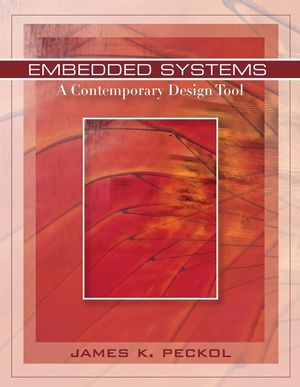
James K. Peckol. |
 |
| Grading | 30% Labs |
| 20% Design Review | |
| 50% Final Report and presentation | |
| Late Policy | Zero credit for anything handed in after it is due without explicit approval of the instructor. |
| Collaboration Policy | Work in groups of three on the labs. You may consult others, but do not copy files or data. You may collaborate with anybody on the project, but must cite sources if you use code. |
