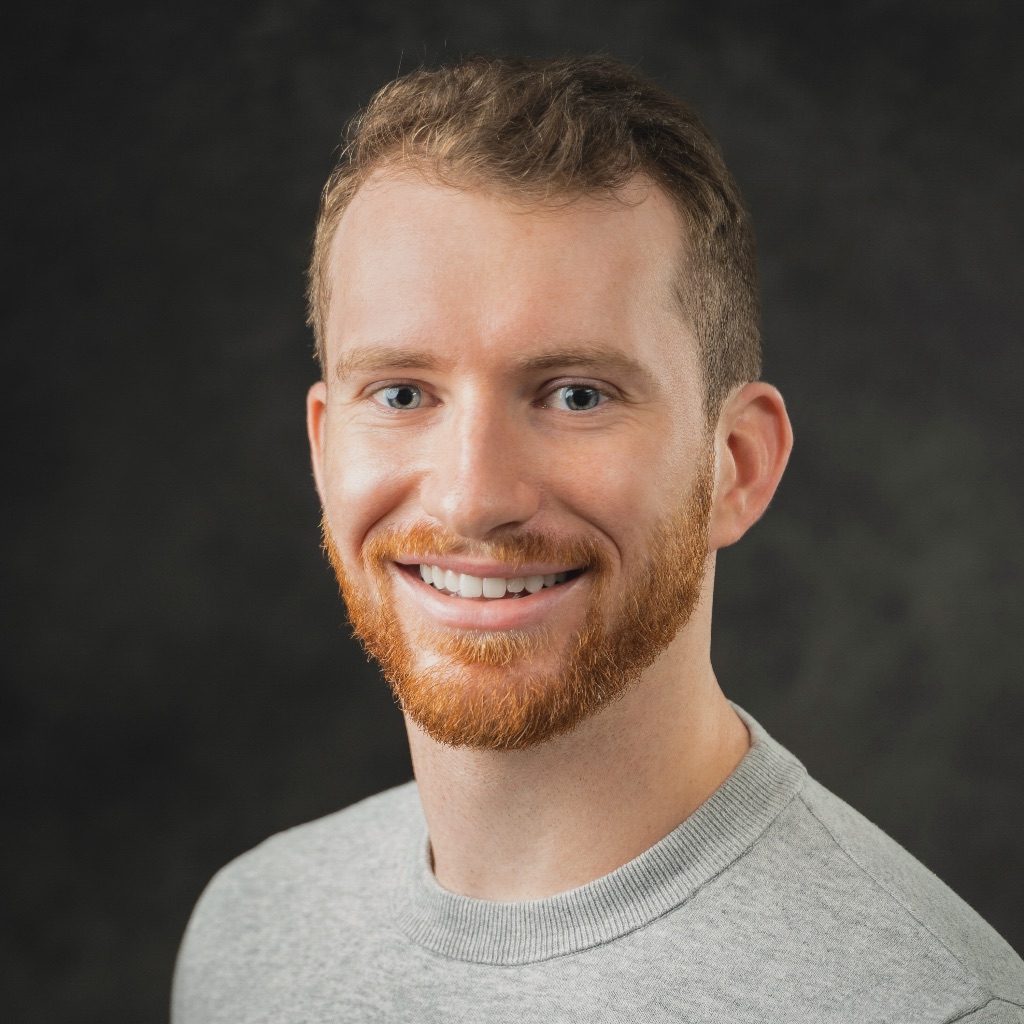
I'm a PhD student at Columbia University in the
Columbia Imaging and Vision Lab (CAVE)
with Shree Nayar.
My research is in computational imaging with a focus on understanding the material properties
of our lived environment. I'm interested in their relevance to robotics and remote sensing.
Prior to starting at Columbia, I completed my BS and MEng at MIT working with
Daniela Rus on autonomous driving.
The ideal grasp for an object should exert no more force than necessary to lift it; we present a method to achieve such gentle grasps in a single, fluid attempt using visuotactile learning.
Hierarchical Material Recognition from Local Appearance
We introduce a taxonomy of materials for visual perception, a dataset of images and depth maps to populate it, and a hierarchical learning method leveraging the taxonomy for recognition.
Matador consists of more than 7k in-the-wild images, depth maps, and hierarchical labels of 57 different materials with varying camera viewpoints and natural illumination.
3D Vision System with Automatically Calibrated Stereo Vision Sensors and Lidar Sensor
Piotr Swierczynski, Leaf Alden Jiang, and Matthew Beveridge
A Bayesian optimization framework with vision-based feedback to discover the control parameters that generate optimal droplets from a continuous fluid stream at arbitrary lengh-scales.
Generalizing Imaging Through Scattering Media with Uncertainty Estimates
Jared M. Cochrane, Matthew Beveridge, and Iddo Drori
WACV Workshop on Applications of Computational Imaging, 2022
We present a learned method for imaging through scattering media which is shown to generalize to unseen diffusers.
Tracking Blobs in the Turbulent Edge Plasma of a Tokamak Fusion Device
Woonghee Han, Randall A Pietersen, Rafael Villamor-Lora, Matthew Beveridge, Nicola Offeddu, Theodore Golfinopoulos, Christian Theiler, James L Terry, Earl S Marmar, and Iddo Drori
We present a novel application of motion tracking to identify and track turbulent filaments in fusion plasmas, called blobs, in a high-frequency video obtained from Gas Puff Imaging diagnostics.
Interpretable Spatiotemporal Forecasting of Arctic Sea Ice Concentration at Seasonal Lead Times
Matthew Beveridge and Lucas Pereira
NeurIPS Workshop on Tackling Climate Change with Machine Learning — Proposals, 2022
We develop a computer vision-driven Bayesian optimization framework for optimizing the deposited droplet structures from an inkjet printer such that it is tuned to perform high-throughput experimentation on semiconductor materials.
Consistent Depth Estimation in Data-Driven Simulation for Autonomous Driving
Matthew Beveridge
Master's Thesis (Massachusetts Institute of Technology), 2021
An exploration into methods for consistent frame-to-frame depth in videos, their use in data-driven simulation, and the effect that consistency has on learned driving policies.
Image2lego: Customized LEGO Set Generation from Images
Kyle Lennon, Katharina Fransen, Alexander O'Brien, Yumeng Cao, Matthew Beveridge, Yamin Arefeen, Nikhil Singh, and Iddo Drori
We develop a data-driven workflow for real-time pedestrian wind comfort estimation in complex urban environments, using generative modeling to produce high quality wind field approximations in seconds compared to days in CFD simulation.
Predicting Atlantic Multidecadal Variability
Glenn Liu, Peidong Wang, Matthew Beveridge, Young-Oh Kwon, and Iddo Drori
NeurIPS Workshop on Tackling Climate Change with Machine Learning, 2021 (Best Paper Award)
We motivate the use of machine learning over traditional persistence forecasting to predict the Atlantic Multidecadal Variability, a ~70 year cycle impacting extreme weather (e.g., hurricanes) in the North Atlantic, up to 25 years in advance.
Predicting Critical Biogeochemistry of the Southern Ocean for Climate Monitoring
Ellen Park, Jae Deok Kim, Nadege Aoki, Yumeng Melody Cao, Yamin Arefeen, Matthew Beveridge, David Nicholson, and Iddo Drori
NeurIPS Workshop on Tackling Climate Change with Machine Learning, 2021
Silicate and phosphate measurements in the Southern Ocean are scant; we present a method to estimate them from more densely sampled measurements such as temperature, pressure, salinity, oxygen, and nitrate.
Miscellaneous Projects
Irradiometer
Digital light meter for iPhone. [code]
Teaching
Columbia
Teaching Assistant | First Principles of Computer VisionF23, F24, F26